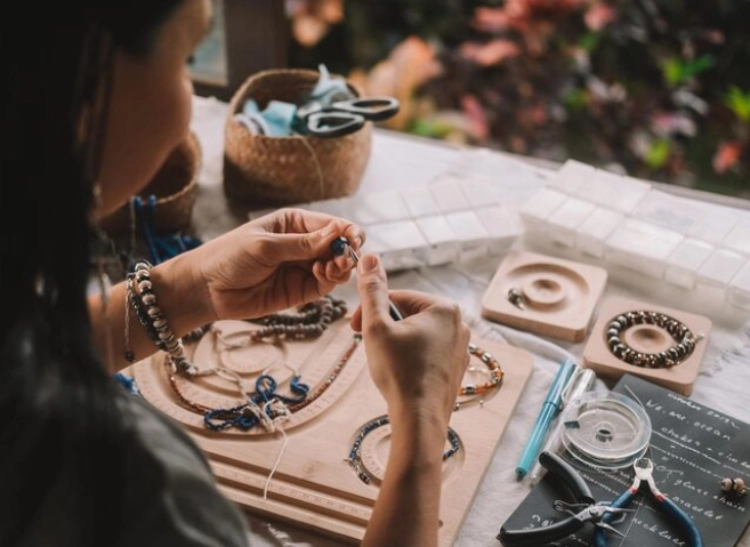
Hand-woven Miyuki beaded jewelry is distinguished by how consistent beads are arranged, tensioned and finished, not by the bead name alone. Wholesale buyers should examine pattern symmetry, thread paths, edge treatment and the connection between beadwork and metal fittings. LANCUI offers Miyuki-themed jewelry designs; the quality of each finished style should be assessed against an approved sample and a defined material specification.
Understand the Materials Behind Miyuki Jewelry
Miyuki is a bead brand, not a guarantee that every finished piece has the same construction or quality. Confirm the bead series, size, color and finish used for the selected design, together with the thread and metal specifications.
Bead Size, Shape and Pattern Consistency
Consistent bead dimensions help a repeated pattern align, but different bead shapes create different surfaces. Cylinder beads and round seed beads should not be treated as identical components. Confirm the actual series and size before comparing pattern density or flexibility.
Examine rows and motif edges under consistent lighting. Look for outsize beads, chips, irregular gaps or substituted colors that interrupt the pattern. Compare with the approved design rather than demanding that every intentional handmade variation disappear.
Thread, Metal and Supporting Components
The joint between woven beadwork and a closure deserves attention because it is handled whenever a bracelet is put on or removed. For the Japanese Miyuki Seed Bead Heart Bracelet, examine how the woven portion meets the fastening components and how the piece rests on the wrist. Ask about thread and metal specifications instead of assuming them from the bead name.
How Material Choices Affect the Final Piece
The bead finish affects color and surface appearance, while the thread, stitch structure and fittings influence flexibility and strength. Request the actual component specifications instead of assuming that a Japanese bead brand identifies the origin or material of every other part.
Keep product claims tied to evidence. Terms such as waterproof, tarnish-free, hypoallergenic or nickel-free need appropriate support for the complete product. Bead identity alone cannot justify a skin-safety or durability claim.
Follow the Hand-Woven Production Process
A consistent handmade design needs a repeatable pattern and a clear finishing reference. Buyers can evaluate the result without assuming that every style uses the same weaving method, thread route or closure.
Pattern Planning Before Weaving
Approve the motif, row count where relevant, bead colors and intended orientation before production. For mirrored earrings, identify the left and right pieces. For symmetrical pairs, compare both against the same reference rather than reversing one automatically.
Use clear photographs of the front, reverse, edges and connection points. Record overall dimensions and the variation acceptable for that design. A photograph alone may hide thickness, stiffness or a poorly secured thread end.
Weaving Tension and Bead Alignment
Even tension should hold the intended shape without puckering or uncontrolled gaps. A piece that is too tight may curl or feel stiff; one that is too loose may lose its outline or expose thread loops. Assess the weave in its natural resting position.
Flex a sample gently as it would move during normal wear, without stretching or destructive pulling. Check whether rows return to position and connections remain stable. Agree any durability test separately, with a method and acceptance limit suited to the design.
Finishing Edges, Connections and Closures
Inspect edges and the reverse for loose ends, visible knots, abrasive thread tails and beads that can catch on clothing. Check that jump rings close properly and that clasps and hooks are securely connected. A neat front surface should not conceal an unfinished back or weak attachment.
Compare Finished Construction, Not Just Production Labels
Hand-woven does not automatically mean better than every mass-produced item. Compare the actual piece for pattern accuracy, consistent tension, secure connections and comfort. Small visual differences may be acceptable, but missing beads, sharp parts and unreliable closures are not desirable handmade characteristics.
Surface Detail and Pattern Definition
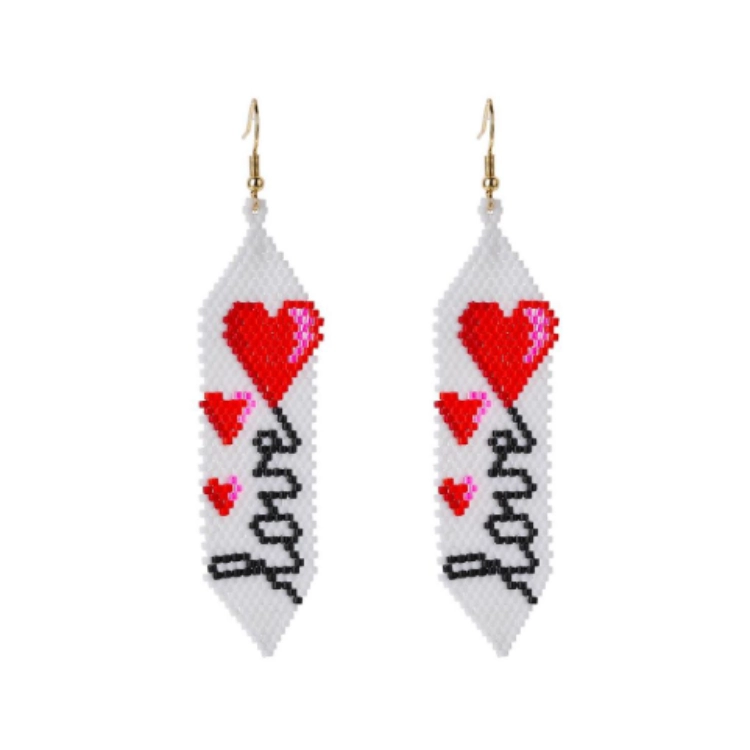
Look at the Japanese Miyuki Seed Bead Heart Earrings together as a pair. Compare the heart outlines, bead alignment, edges, and attachment points. Handwork can produce small differences; the useful question is whether those differences disrupt the intended pattern or the way the earrings hang. Review both the front and reverse so a neat face does not hide an unfinished connection.
Flexibility, Weight and Wearing Comfort
Assess weight, flexibility and the contact surfaces relevant to the product. Earrings should hang as intended; bracelets should flex around the wrist without harsh edges; necklaces should allow the motif to rest naturally. Confirm dimensions and weight for the selected style rather than inferring comfort from a product name.
Use a clean sample for a controlled fit assessment and check the reverse and fittings against skin or clothing contact points. Comfort varies with size and wearer preference, and it does not establish material safety. Obtain the applicable material and compliance evidence separately.
Inspection Points for Wholesale Buyers
Approve the pattern and construction together, then compare production against that reference. LANCUI’s discussion of scaling handcrafted details for wholesale jewelry connects individual design details with repeat-order consistency. Define tolerances, defect categories and inspection methods before shipment instead of deciding what is acceptable only after the goods arrive.
Set Acceptance Criteria for Each Jewelry Type
Use the same quality principles across a collection, but adapt the checks to how each item is worn. An earring pair needs a pairing check; a bracelet needs fit and closure checks; a necklace needs drape and connection checks.
Japanese Miyuki Seed Bead Heart Earrings
For the heart earrings, compare the outlines, colors, length and hanging direction of both pieces. Check the hook or post orientation and all attachment points. Confirm that the pair matches the approved mirrored or symmetrical design.
Reject or hold pieces with chipped beads, loose attachments or exposed sharp ends. For minor differences in outline or size, use the tolerances agreed for that style. Do not classify every mismatch as normal handwork.
Japanese Miyuki Seed Bead Heart Bracelet
For the heart bracelet, confirm the wearable length or adjustment range and how the woven portion meets the closure. Operate the clasp through the agreed inspection routine and check that the connection does not distort the motif.
Review the inside surface and edges for snagging or uncomfortable projections. Compare flexibility and finished width with the approved sample. A bracelet using the same beads as a necklace still needs its own size and construction criteria.
Japanese Miyuki Seed Bead Heart Necklace
With the Japanese Miyuki Seed Bead Heart Necklace, inspect the heart motif while the necklace is hanging naturally, not only lying flat. Check whether the attachment lets the motif sit as intended and whether the reverse feels comfortable against clothing. Confirm the necklace dimensions and component materials for the order rather than transferring assumptions from the earrings or bracelet in the same collection.
Conclusion
Good hand-woven Miyuki jewelry combines consistent components with accurate patterns, balanced tension and secure finishing. Evaluate the whole piece, including its reverse and fittings. For wholesale supply, a defined acceptance standard is more useful than relying on the word handmade as a quality claim.
Contact LANCUI
Send LANCUI the designs, order quantities, material requirements and acceptance criteria through its contact page. Include approved reference photographs, intended dimensions and the details that must remain consistent across repeat batches.
FAQ
Does the Miyuki Name Guarantee Finished Jewelry Quality?
No. The bead specification matters, but weaving tension, thread, edge finish, connections and material claims need separate checks. Confirm the stated bead identity and assess the finished piece against the approved sample.
How Much Handmade Variation Is Acceptable?
Agree it by design. Define acceptable dimensional and visual differences using an approved sample and photographs, while treating missing beads, open connections and sharp edges as defects. Handmade production is not a reason to accept a broken or mismatched item.
How Should Buyers Inspect a Wholesale Batch?
Define the lot, sampling method, inspection level and acceptance limits before shipment. Check materials and identifiers, dimensions, pattern, tension, edges, fittings and pair matching. Record defects and hold nonconforming goods for review. If using an AQL plan, agree its standard and defect categories; it is a sampling rule, not a guarantee that the lot contains no defects.