The sample has a main chain, an extender and a charm; the size note says “23 cm.” Where does that figure stop? Until the endpoints are named, it cannot go into a size chart.
At a glance
A useful size note separates the ankle circumference from the finished jewelry length, then gives extender range and charm drop their own fields. Each figure needs a named point on the current sample.
Keep body size apart from jewelry length
The wearer’s ankle circumference and the finished anklet length describe different objects: one wraps around the leg, the other follows the closed chain or bead path. An extender changes the clasp position; a charm drop hangs below the chain. Combining these values hides what the buyer is actually being told.
| Field | Record |
| Ankle | Named wearing point |
| Chain | Closed-item endpoints |
| Extender | Usable links |
| Charm | Attachment to lowest point. |
An old sample card marked only “25 cm” cannot be used as a listing value until its measurement is identified. It may describe the wearer or the jewelry, and those numbers are not interchangeable.
Measure the ankle where the anklet will sit
The tape should sit where the anklet is meant to rest, touching skin without pulling tight. A measurement above the foot will differ from one around the narrowest part of the ankle. Write the chosen location into the order note. Without a soft tape, mark the overlap on a paper strip and measure the strip flat.
Suppose the buyer’s tape reads 22 cm around the ankle. The figure belongs in the body field, not the chain-length field. The sample needs its own length, based on how it should sit when worn. A fine chain can shift during a walk; heavier beadwork may stay put and let the charm swing instead.
“Comfortable” still needs a visible target. A buyer may want the charm clear of a shoe, or may prefer the chain to move freely. A note that says “add 2 cm” is incomplete unless it names the starting measurement and where the clasp should land.
Measure the finished anklet consistently
For a straight chain, the GS1 Package and Product Measurement Standard defines effective length from clasp to clasp. That is the product dimension on the table; it does not include ease around the ankle. Use NIST metric guidance for unit conversion and apply the same rounding rule to every variant.
Size is a product representation under the FTC Jewelry Guides Section 23.1, so the number must describe the item named beside it. An ankle circumference copied into a chain-length field gives the listing a different meaning.
A broad clasp can move the starting point, while a small clasp on the last link may leave it clear. Mark the selected ends on the sample sketch so the next measurer can repeat them. “End to end” means little if one person starts at the clasp and another at the link.
Follow the path the jewelry actually takes
Lay the chain in a relaxed curve rather than stretched between the fingers; tension can lengthen a chain, while pinched beadwork shortens the route. On cord or a bead strand, follow the centerline around the closed piece. A straight ruler across the outside edges gives width instead.
Keep the extender and charm in their own fields
Start the extender reading at the first link the clasp can hold, then finish at the last usable link. Record that range separately. Measure the charm from its attachment to its lowest point; that drop is not part of the chain around the ankle.
For example, log a sample as 21 cm closed chain, 3 cm extender and 2 cm charm drop. Do not merge those into “26 cm.” That sum combines chain path, adjustment and vertical drop. The numbers here only show how to record a sample; they are not a LANCUI specification.
Check the sample in motion
The bench reading will not show how the charm moves. Fasten the sample at the stated position and walk in it. Does the chain turn? Does the charm swing under the foot? If the listing shows it with shoes, check the same sample in that footwear; the ruler cannot reveal a snag point.
Keep the measurement beside the sample revision. A photo showing the endpoints helps: “clasp to clasp” might start at the clasp’s inner edge or the final link, and either could look plausible in a text note. Record the tool and unit. Leave cord or beadwork relaxed under the ruler; compressing it changes the path.
Keep the old value when the revised sample arrives. A new clasp or repositioned charm can explain the difference. Store each measurement with its own sample code; overwriting the first figure removes the record of what changed.
The measurement method should travel with every revision: note the tool, unit, wearing point, chain endpoints and whether the extender was engaged. Keep the flat dimension separate from the worn-fit check. That gives the next reviewer enough detail to repeat the measurement instead of guessing how the previous figure was produced.
Put the fit request into the product specification
For a custom order, put the wearing point, intended movement, chain endpoints, extender range and charm-drop method into the brief. LANCUI describes OEM as production to a client’s established design and specifications, with work carried out by skilled artisans and supported by a supplier network. The buyer can define the anklet measurement method in that design file, but it does not establish one standard length or fit allowance for every style.
That distinction changes what belongs in the first sample request. Under OEM, the buyer supplies the design and can mark the required endpoints on its drawing. LANCUI’s ODM service includes trend analysis, design work around a client’s brand identity, customization, prototyping and sample development. The brief should settle the wearing position and length fields while the prototype is under review; the approved values then travel with that sample revision.
LANCUI’s inspection service checks raw materials, monitors production and reviews finished appearance, dimensions and function against client requirements. The company provides inspection reports and communicates feedback with clients. For an anklet order, the buyer can put the chosen length and fit checks beside those dimensions so sample review and finished inspection refer to the same requirements.
LANCUI lists product photography with models, technical drawings and artistic renderings, sample making, and custom packaging among its support services. Its packaging details describe designs tailored to the client’s brand and product, including eco-friendly options and protective materials for transport and display. The company also lists semi-precious stones, Miyuki beads, stainless steel, alloy and cotton thread among materials used across its handmade jewelry range. These are company-wide capabilities and materials; none of them supplies a size figure for an individual anklet. The SKU and approved sample still determine that number.
LANCUI combines artisanal work with larger-scale production and has more than a decade of handmade jewelry experience.
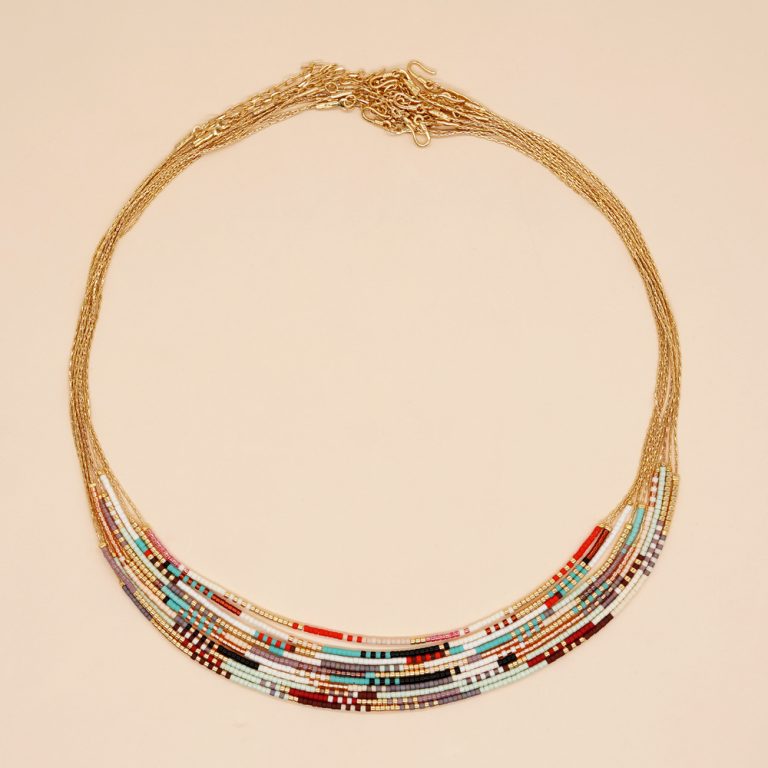
LANCUI lists an adjustable twisted-link chain of 41–50 cm for its rainbow Miyuki bead necklace; its holiday pendant necklace is also adjustable from 41–50 cm. These dimensions belong to those necklace styles. They do not set an anklet size, whose wearable path and endpoints must be measured on the approved sample.
The LANCUI website has an anklet category page for reviewing product styles. No single category page can establish the size of a buyer’s sample. The approved design and its measurement record remain the reference. For custom development, the About Us page describes the company’s work, and the custom collection brief can help organize a new specification. A style-specific question can go through the contact page with the SKU or sample revision.
Revisit the size note after a construction change. A different clasp can shift the endpoints, an added link changes the extender range, and a moved charm changes its drop and balance. Keep the published measurement tied to the current sample revision rather than carrying one unqualified “anklet length” across several variants.
The handoff record can keep the values apart:
1. Circumference at the named wearing point.
2. Closed jewelry length and the clasp endpoints used.
3. Extender range and charm drop as separate dimensions.
Record the final listing
The page note can read: “Main length measured relaxed, clasp to clasp; extender and charm drop listed separately.” The FTC Jewelry Guides Section 23.1 caution against size claims that misrepresent the product. Use these fields for the example.
| Field | Example | Points |
| Ankle | 22 cm | Named point |
| Main length | 21 cm | Clasp to clasp |
| Extender | 3 cm | Usable links |
| Charm drop | 2 cm | Attachment to lowest point. |
These values are examples only. Convert both units from the same checked measurement and round consistently; converting does not change the fit relationship. Measurement endpoints are the physical start and stop points. Identify them when a clasp or charm makes “length” ambiguous.
Before publishing, check that the chart uses the approved sample’s clasp endpoints and keeps charm drop separate. Recheck affected fields when hardware changes.
FAQ
Should the extender count toward the main length?
List it separately. The GS1 chain measurement guidance defines a chain’s effective length from clasp to clasp; if the page also gives the full adjustment range, name the clasp positions used for its minimum and maximum.
Does the charm drop add to the wearable length?
No. It measures down from the charm’s attachment, while the main length follows the chain or bead path around the ankle.
Sources: GS1 Package and Product Measurement Standard; NIST metric conversion guidance.