One line in the order can request a leverback. The photo still needs a side view; that is where the arm either clears the beads or meets the card.
At a glance
The parts list uses closure names from the Jewelers of America findings glossary; the hanging sample still has to show where the fringe settles beside it.
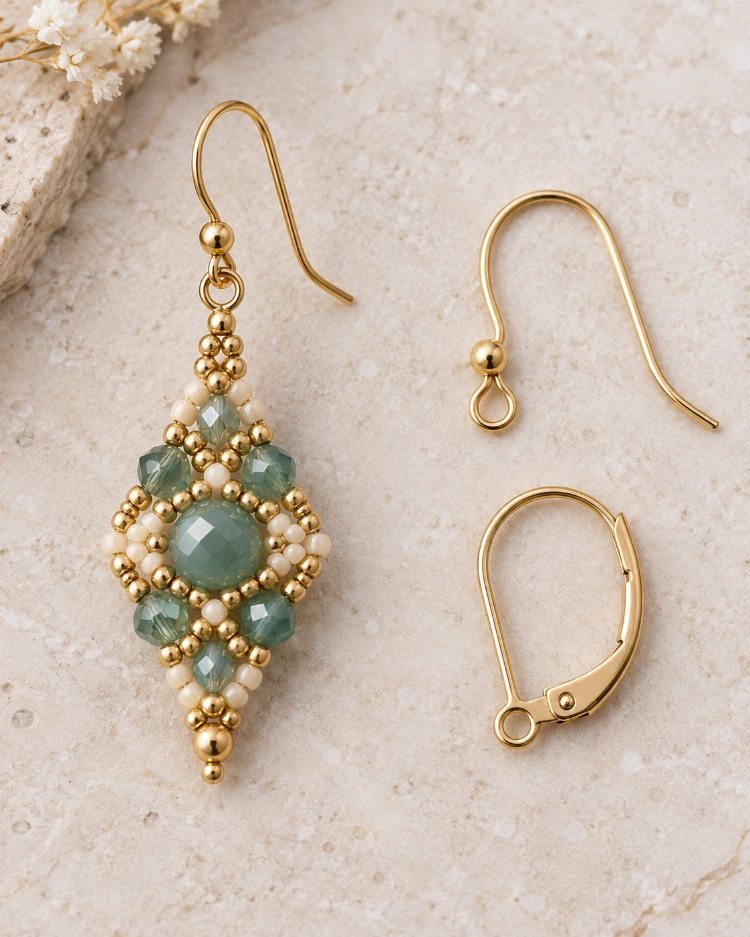
| Detail | French hook | Leverback |
| Closure | Open curved wire | Hinged arm and catch |
| Sample check | Match the curve and wire end | Check the hinge and closed position |
| Possible issue | Drop may turn as it swings | Hinge may sit close to fringe or card |
The names describe hardware, not fit
The Jewelers of America findings glossary defines the closures. A French hook is an open curved wire; a leverback is a hinged finding with a closing arm and catch. An earring finding is the hardware used to attach and wear the piece. Metal, finish and wire gauge belong elsewhere on the purchase specification; the assembled earring shows whether the chosen mechanism suits the beadwork.
Write “leverback, gold color” and the supplier knows the closure and visible shade. The line stays silent on what the part is made from, what surface treatment it carries and how large the catch is. Those are separate questions, even on a simple order.
A line reading “French hook, gold color” can point to several parts in the supplier’s range. A part number or drawing narrows it down; the gauge and finish should have their own entries beside it.
A silicone back is a small piece to omit when the order moves from sample bench to pack-out. If the product image shows one on an open hook, the packing note should include it; otherwise the picture and carton describe different sets. With the leverback, the check moves to hinge alignment.
Watch the drop at the jump ring
The jump ring is where the drop makes its turn. A cramped opening can draw a strand sideways; extra room lets the beads shift. If the fringe crosses itself each time it settles, look at the connection before changing the hook.
On the LANCUI product page, Spirit of Nature beaded fringe earrings appear with glass seed beads and metal hooks at about 12 cm by 4 cm. LANCUI’s product information describes this handmade, lightweight style as comfortable, with bold orange, purple and blue beadwork and a flowing fringe. The designs draw on landscapes, stars and wildlife. The published version uses an open hook. A leverback would sit beside the top strands; the listed dimensions do not show whether its hinge clears them, so the alternate needs its own sample check.
LANCUI’s product notes mention birds, stars and moons among the motifs, and describe the fringe as flowing and light to wear. Across its wider handmade range, the company lists semi-precious stones, Miyuki beads, stainless steel, alloy and cotton thread. That portfolio list is not the material specification for this hook; the chosen finding still needs its own part number and composition.
The listed 12 cm is the overall length, measured from top to bottom. It does not show the clearance between a leverback hinge and the first bead. That space is visible only when the new finding is attached to the actual fringe.
A head-on photo can hide the hinge against the fringe. Put the assembled sample on its approved card and turn it until the side profile is visible. The open and shut positions show different things: one lets the beads settle clear, while the other may bring the arm against the top row. Check the back as well, where both catches or wire tips should line up. Keep these views with the sample revision. When the closure changes, the old photograph no longer shows the item named on the order.
Lift it by the finding and let the beads hang under their own weight. A strand may tuck behind the hinge while the piece is flat, then catch as it is picked up. If the drop turns each time, check the jump ring before requesting new hardware; the hook may be fine.
Open hook: room to swing, no latch
The open wire leaves more room behind the ear and no hinge near the top strand; that space comes with an exposed end. Orders that include a stopper need to show it on the sample. Compare the curves too: if one wire tip angles farther out, its earring may face the wearer while the other turns away.
Leverback: check the hinge under the beadwork
Close the pair and look from behind. One catch may line up while the other arm sits high; side pressure can disguise a small hinge mismatch. When both are closed, check the top bead and thread for contact. Dense fringe leaves little tolerance for a hinge that works in isolation but crowds the first row.
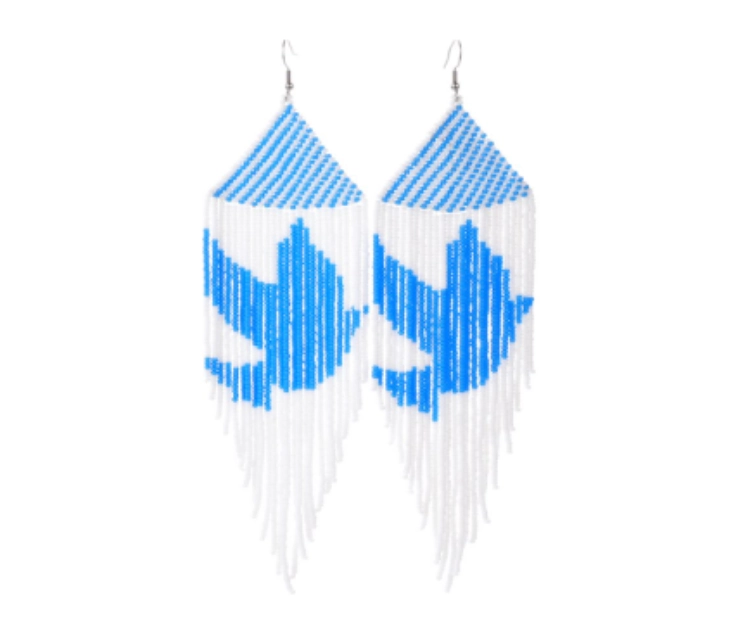
Compare the findings without changing the beadwork
To compare the closures, keep the bead pattern, jump ring, orientation and card unchanged. Otherwise the hook is not the only thing that changed, and the reason for a different swing becomes hard to trace. Put the sample code on the card before the pair moves between review and packing.
A tray can hide a mismatch: one drop faces forward, while its mate turns inward as soon as the pair is lifted. Let them settle off the card, first open and then with the leverback closed. The hinged arm takes up space behind the fringe; a flat photo will not show how much that matters once the earrings move.
For example, a pair can sit evenly on its card and still turn in opposite directions once lifted. The jump ring or attachment may be responsible, not the closure; keep that distinction in the sample record before requesting another hook. Packaging adds a separate check: a narrow slot may push a closed arm into the top beads, while a pouch can let a long hook cross the fringe. Take the approved pair out by its finding and note any snag, bend or shifted bead before the pack is signed off.
LANCUI offers sample development for custom work, and its finished-product checks cover appearance, dimensions and function. The buyer’s specification can name the finding and stopper; the sample then shows how those parts sit beside this pattern. Card fit remains a separate approval because the finished earrings meet the packaging there, not on the bench.
When the finding changes after approval
Changing the hook creates a new sample version even when the beadwork is untouched. The revision note can retain the pattern and dimensions, then identify the replacement finding and the sample that needs sign-off. Check orientation, clearance behind the lobe and fit on the card; a leverback can close on the bench and still press on a strand once packed.
For a run built from a buyer’s finished specification, OEM carries that requirement into production. LANCUI pairs skilled handwork with machinery and its supplier network; the work covers different order volumes. If the hook is still open to change, ODM brings design input earlier. Its team studies trends, works with the client’s brand identity and develops a prototype and sample before production. Handmade jewelry has been LANCUI’s work for more than a decade. Its first overseas collaboration was with Hipanema, created by Parisian designers Delphine and Jenny. That history explains how a closure can be handled in a product brief; only the assembled sample shows whether a leverback clears this fringe.
A closure change gives the inspection plan a concrete job. LANCUI checks raw materials, monitors production and reviews the finished pair for appearance, dimensions and function. Inspection reports and feedback carry those checks back to the client. For this earring, a change record can name the finding and sample revision, then show clearance in a side view. LANCUI supports product development with technical drawings, illustrations, 3D renderings, model photography, image post-processing and sample making. Custom packaging is designed around the client’s brand and product; eco-friendly options and protection for shipping and display are available.
Questions buyers ask about earring findings
Is a leverback more secure than a French hook?
The leverback closes against a catch; a French hook stays open. The mechanisms differ, but neither supports a guarantee for every wearer or activity. Check the selected part and avoid absolute safety language.
Can a leverback replace the hook on a finished beaded earring?
It can be proposed, but the revised finding should be approved on an assembled sample. The hinge may change clearance, movement and package fit even when the bead pattern remains unchanged.
Which finding works better for long fringe?
The sample has the answer. Look at the drop from the front and side, move it gently, and confirm that the hinge or wire does not catch the strands. The Jewelers of America findings glossary can help confirm the hardware name, but only an assembled sample shows how that finding sits beside this fringe.
For LANCUI’s custom development process, see the About Us page. For a product-specific question, use the contact page and include the SKU or sample revision.
On the approval record, list the selected finding, any stopper, the sample revision and the approved card or pouch. If one of those changes later, the product team can see which detail needs another review.
For the final product note, keep these details together:
- Finding name and supplier part number.
- Stopper or back included with the order.
- Sample revision and approved packaging reference.
Sources: Jewelers of America earring guide; Jewelers of America findings glossary; FTC Jewelry Guides.