A useful jewelry quality inspection leaves you with a decision you can explain. Which version was checked? What differed from the approved sample? Which pieces need attention before dispatch? For handmade beaded orders, write those answers against the SKU and colorway. A general comment such as “quality looks good” gives your receiving team very little to work with.
Start the record before production. Keep the approved sample, component description, measurements, and agreed variations together. Then carry that same reference through material checks, work in progress, finished-product inspection, and the supplier’s report. This guide shows what a buyer should put in that record and how to use it when something goes wrong.

Give the Inspector One Approved Version
This scenario outlines a situation where a purchase order refers to a blue necklace, the sample photo is of a turquoise colored product and later in the conversation approval is given to a different type of clasp. Nobody wants to have to re-trace the decisions that have already been made via the chat history. Include the latest version on a dated specification sheet, and include a clear photo of the approved physical sample.
LANCUI offers products according to the designs provided by customers. As for ODM services, LANCUI can complete the design of products for customers and provide prototype samples and so on. In terms of the production of prototype samples, LANCUI’s Prototype Makers can quickly translate customers’ designs into reality so that they can test and make improvements to the products before they go into mass production. The design team works closely with the manufacturing team.
Make sure to close all open questions on the sample. Modifications to the hook, thread, bead finish or chain should be recorded on the same revision as modifications to the main body of the product. Verify with your supplier which version your production team received.
Define Handmade Variation Before It Becomes a Dispute
Do not write “handmade variation accepted” and leave it there. Identify the features that may vary, then agree their acceptable appearance or measurement range. A slight difference in fringe position calls for a different discussion from a missing bead or a fastening that will not close.
Use photographs to illustrate the boundaries. Clearly label approved versus rejected jewelry samples. Make certain the lighting is similar and view the entire piece as well as a close-up of the sample. These are order-specific acceptance samples, not jewelry standards that will be used for all time.
Build a Jewelry Quality Inspection Record Around Four Stages
LANCUI’s manufacturing and inspection services outline a four-stage process: raw materials are inspected, production is monitored, final products are inspected and feedback given to clients in relation to their orders. The final inspection will include reference to appearance, dimensions and function in relation to the clients’ ordered product against the terms of their order file. Methods, sample numbers and acceptable limits need to be formally recorded against the order file prior to the actual order being placed.
| Stage | What to record | Question the record should answer |
| Raw materials | Component description and agreed reference | Are these the materials approved for this version? |
| Work in progress | Issue, affected work, and correction | Was the cause addressed before more pieces were made? |
| Finished products | Observation, measurement, or functional result | Does the checked item meet the agreed requirement? |
| Report and feedback | Decision, responsibility, and follow-up | What must happen before this order can be released? |
Raw Materials and Work in Progress
Incoming materials should be checked against the agreed quality parameters before production begins. Production monitoring then focuses on identifying irregularities while the work is still in progress. Therefore, material check and production check are two separate stages of the process and do not replace each other.
Be sure to get approval for any material substitutions for your order. Even though the new bead may be listed in similar colors, a slight change in the bead can affect the design. Keep the component description, the request for substitution and the approval together as a production note and do not allow it to become an after thought change.
The Supply Chain team at LANCUI manages procurement of all suppliers for materials and coordinates the flow of materials through production. The Manufacturing team consists of designers and prototype makers, managing material selection and quality control for all produced articles. It is best to ask which department will record any substitution and then inform the quality control inspector with the updated reference.
If an issue appears during beading, the record should say where it was found and which work may be affected. “Thread corrected” is too vague. A more useful note identifies the relevant SKU, describes the correction, and says what will be checked again. Do not assume that correcting one sample resolves every piece already made..
Finished Products and Client Feedback
The Final Product Inspection of LANCUI covers aspects of appearance, dimensions and functionality of products and is followed by detailed reports on the inspection results and corresponding communications with our clients. The reporting stage is part of the buying process and should be agreed upon before the inspection takes place in order to clarify which observations have to be reviewed by your staff in the corresponding report.
Decide who can approve a deviation. The person reading the report may need input from merchandising or product development; an inspector should not have to guess whether a changed color is commercially acceptable. Keep the resulting approval or rejection with the inspection record.
Match the Checks to the Jewelry Construction
There is no one checklist for fringe earrings and an adjustable necklace. While both need a clear design reference, the vulnerable parts and the measurement points for each will differ. Choose a check that answers the question for the specific product you are trying to sell.
Beaded Fringe Earrings
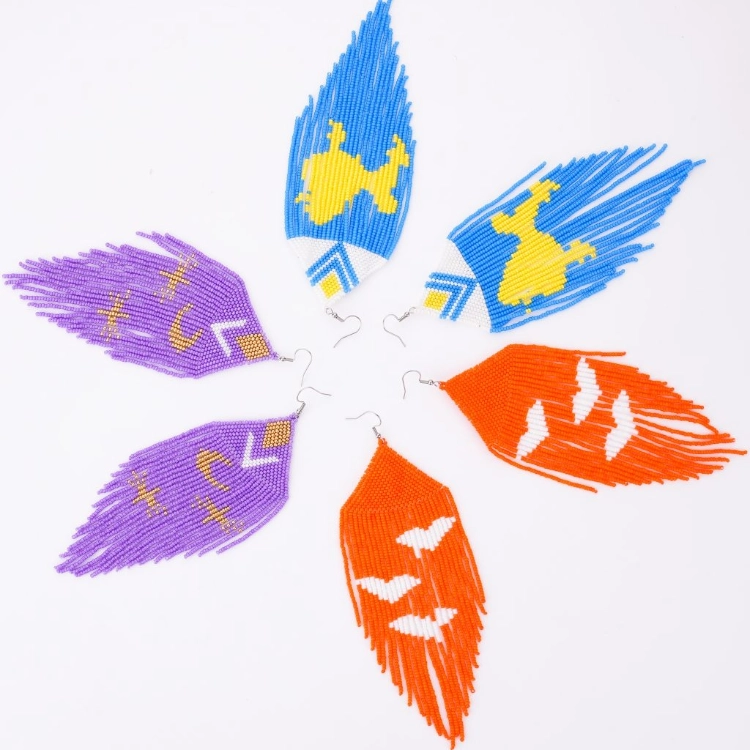
The Spirit of Nature Boho Beaded Fringe Earrings are a nature and celestial themed collection of jewelry, using landscapes, stars and wildlife as inspiration. The approved approved design features orange, purple and blue beadwork, and has been constructed using a flowing fringe. Using this design as a reference for motif, color and fringe, the selected earrings have been approved.
Lay both earrings out next to the sample for the compare, ensure that they are laid out in the same way, this includes how the motif will appear when paired as well as how the fringe will hang. Examine the joins, visible thread ends. Test the agreed method of fastening by hand. If something needs to be investigated for a point of failure do not try to force it to break, instead record your findings and test in a defined manner to failure if required and with permission.
Adjustable Beaded Necklaces
The Bohemian Style Rainbow Miyuki Bead Handmade Necklace is described with Miyuki DB beads, glass pendants, a geometric design, and an adjustable twisted link chain. Its listed adjustment range is 41–50 cm. These are product-specific details to confirm for the ordered version, including the selected colorway; they should not become assumptions about every necklace in a mixed order.
Agree how necklace length will be measured. Specify whether the measurement includes the clasp and extension, and use the same endpoints each time. Check that the adjustment works as intended and that the pendant sits in the approved position. A photograph of a ruler beside the piece is only useful when both ends of the measurement are visible.
A product photograph documents the design being discussed. It does not show that an inspection has taken place or that the pictured item passed a test.
Turn a Defect Photo into an Actionable Decision
Send two views when reporting a concern: one that identifies the complete item and one that shows the detail. Add the SKU, colorway, inspection stage, and a short description. If the issue concerns size, include the measurement method and observed result. Keep the original files so the supplier can enlarge them.
“Necklace too short” leaves room for an argument about where the measurement started. “Measured between the agreed endpoints; result entered beside the approved specification” gives both teams something to compare. Use the order’s agreed tolerance to decide the result. Do not borrow a convenient tolerance from an unrelated product.
Group findings by their effect and the agreed acceptance rules. A functional fault, a visible finish issue, and a wrong colorway may require different responses. Record whether the proposed action is repair, replacement, sorting, further assessment, or buyer approval of a deviation. For corrected goods, specify what evidence will close the issue and who will review it.
Keep Visual Checks Separate from Material Evidence
You can inspect a rough edge or a clasp that sticks. You cannot establish metal composition or a restricted-substance result from a product photo. Obtain material descriptions and, where needed for your intended market, relevant test documentation for the actual materials and product version.
Read the scope of a report before relying on it. Check the sample identification, tested material, test date, and stated method. If a component changes after testing, ask whether the existing evidence still applies. Avoid turning a supplier’s general capability statement into an unsupported claim on your retail listing.
The same care applies to sensitive-skin claims. A smooth hook and a familiar metal color are observations, not proof that an item is suitable for every wearer.
Close the Order File Before Dispatch
Review unresolved findings against the agreed release conditions. Save the final report, approved deviations, and any required follow-up evidence with the purchase order. Confirm that the inspected version matches the version being packed. Your receiving team should be able to find that record without contacting the person who placed the order.
For an inspection inquiry, send the product links, proposed quantity, destination market, approved sample status, and the checks you need. Ask which inspection stages are included, how findings will be reported, and how corrections will be handled. A short, precise request is easier to quote than a demand for “best quality” with no acceptance criteria.
Questions About Jewelry Quality Inspection
How many pieces should be inspected?
Agree the inspection scope and sampling plan with the supplier or inspection provider before work starts. The appropriate approach depends on the order, product risks, and buyer requirements. This guide does not prescribe a sample count or acceptance limit for every shipment.
Can an inspection report replace an approved sample?
No. The report records what was checked and found; the approved sample and written specification establish the reference. Keep them together, with any agreed changes. Without that reference, a detailed report may still leave both parties disagreeing about the product they intended to make.