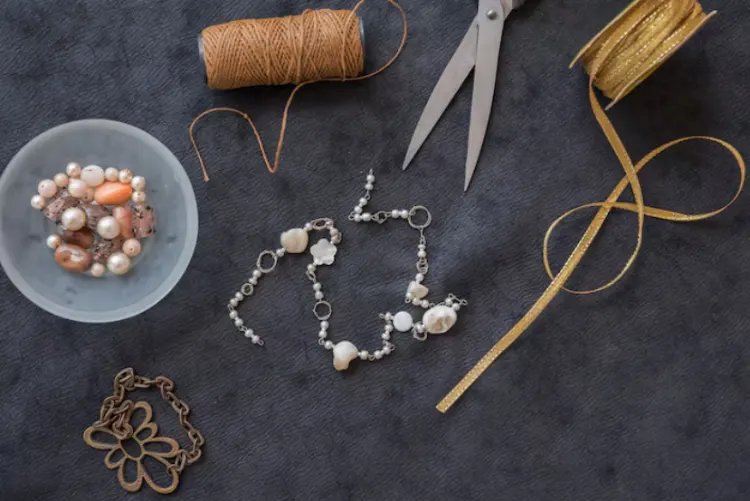
Selecting a custom jewelry manufacturer for a new collection is a product-development decision, not just a comparison of quotes. You need someone who can implement your design concept to make a repeatable sample, get the right materials, document your quality control, and more support at the point of retail presentation to your customers.
Keep the brief for your first collection practical. Outline the products, decide between OEM or ODM, approve a prototype and agree upon the key checks relevant to your customer.
You can see how the color, pattern, pendant, and length of the beads get decided when making a Miyuki bead necklace.
Start with a collection brief your manufacturer can actually use
A mood board helps a designer explain direction. A manufacturer needs a little more. Send a short document with the collection name, target customer, piece types, reference images, preferred materials, dimensions, color codes, finishing notes, packaging expectations, and the date by which you need an approved sample. If a detail is still open, label it as open rather than leaving the factory to guess.
The brief should clearly detail items that the supplier must match against examples supplied, and those on which they can offer advice. For example, logo placement, bead pattern, type of clasp and length of chain may all need to be specified and noted against the original requirement if the supplier offers an alternative finding.
Here is a compact checklist for the first call:
- Collection story and intended retail position
- Product list and estimated style count
- Material and color requirements
- Size, weight, adjustability, and comfort notes
- Reference sample or drawing for each hero style
- Prototype approval steps and revision notes
- Quality checks, packing method, and product images needed
- Questions about order quantity, timing, and market requirements
The online product page does not confirm current stock, minimum order quantities or delivery dates. This information must be included in the quotation.
OEM or ODM: choose the development route first
The term OEM and ODM can be distinguished best by comparing them. OEM is created from your design that already has been developed, whereas ODM is created from a design concept provided by the manufacturer for development into a collection for a brand that is to be created by you.
When OEM is the better fit
OEM is best for production of products for which you already have complete technical drawings, a sample part, or a very detailed specification. The manufacturer should be able to produce the part exactly as designed using the materials specified. It is best to find out how a manufacturer records changes to a part, what parts they make in-house and how they compare a production part to the approved reference sample.
Our OEM service for established designs is supported by a network of suppliers, highly skilled artisans, modern machinery and strict quality control from material selection to finished product. Convert this into questions such as: Which materials are to be used? What is to be checked prior to assembly? Who signs off the finished sample?
When ODM is the better fit
ODM is ideal for customers with a fixed customer or design-profile, who do not have a completed technical design. Inquire how trend reports are translated into design concepts, how many rounds of prototype-testing are included in the service, and when you can offer feedback on shape, color and wearability. The final collection will still require your approval. “Designed for your market” does not have to mean that you are relinquishing control of all the details that make a brand recognizable.
The OEM and ODM jewelry manufacturing service has designers who incorporate current trends with the customer’s brand identity in their design work. The ODM service covers design proposals, customization, development of a prototype and production of a sample prior to the actual production of the designed articles. Market research relating to current fashion trends and customer wish lists is also conducted by our ODM service. Articles are designed by our designers in consultation with the client relating to the materials to be used and methods of construction.
Check material sourcing against the design, not just the sample photo
Make a list of the materials and the reasons they are important to the design. LANCUI’s supply chain team handles the procurement of materials, dealing with raw-material suppliers. The manufacturing team works with designers and prototype makers to select the materials and check the quality of the chosen materials. If a proposed substitute affects the bead pattern or the fastening’s feel, then these roles become important. Who will get the alternative material? Who will make the new sample? Who needs to approve the changes?
For example, the Bohemian Style Rainbow Miyuki Bead Handmade Necklace is described on the product page with Miyuki DB beads, organic glass pendants, a geometric pattern, and an adjustable 41–50 cm chain. Those details are useful as a specification model. They are not a reason to copy the piece. Your own brief should state which elements are required and which are only visual references.
Ask the manufacturer to confirm:
- The material and finish for each visible component
- Which colors are fixed and which may vary between natural materials
- The parts that touch skin or carry the most movement
- How substitutions are proposed and approved
- What information will appear on the product sheet and care card
Make the prototype a decision record
Check the first sample made from your sketch as if it were a product you had ordered. Take it for a test drive and see how it looks when worn as intended. Try on a necklace and open and shut the clasp. Move an earring around and turn a bracelet over to check the reverse. Make a list of all the things that need to change. Bead alignment, chain length, sharp points and edges, uneven fringe, loose findings, color balance and how it will travel in packaging.
Give feedback in a way the maker can reproduce
Send one marked-up file or sample sheet. Number every change and include a photo when needed. “Make it nicer” cannot be measured. “Move the pendant two beads lower and keep the chain at 45 cm” can be checked in the next round.
LANCUI has prototype makers who translate design concepts into physical samples and refine them through testing before mass production. For a new collection, ask who owns the sample file, how revisions are dated, and which version becomes the approved production reference.
Use product examples to test the questions
The Bohemian Colorful Semi-Precious Stone Beaded Lucky Charm Bracelet is described as a glass-bead and semi-precious-stone bracelet with a geometric design and adjustable fit. A buyer could use that kind of design to test practical questions: How is the adjustable section finished? How are different stone shapes sorted? What does the approved color mix look like when several bracelets are displayed together?
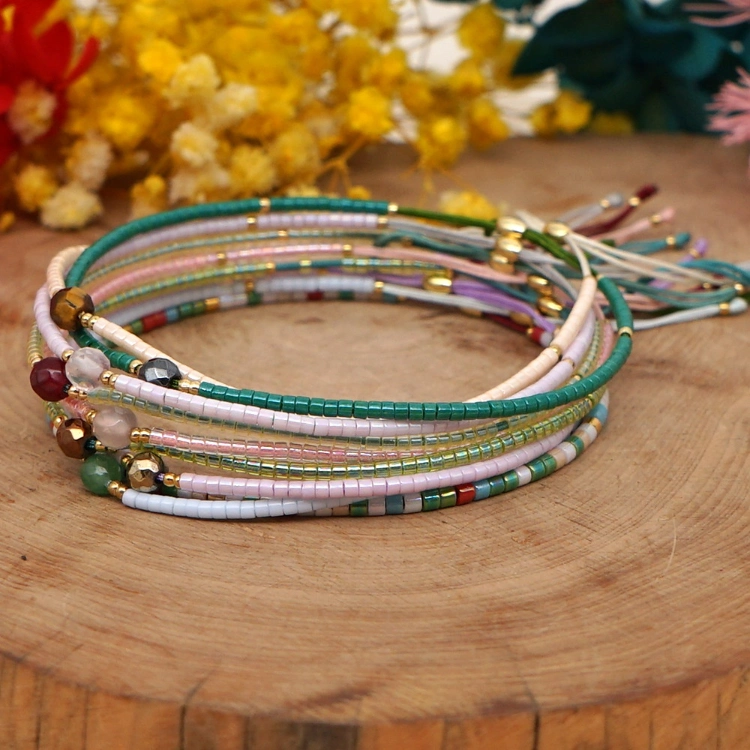
A beaded bracelet makes a useful sample to check for fit as well as to check components and a color mix as a small collection.
Require quality checks at more than the final table
A finished-piece inspection will only reveal visible defects, and it does not necessarily reveal when the defect occurred. Include checkpoints at the raw material, production, and final stages of production. A practical four-stage inspection workflow covers raw materials, production monitoring, finished-product inspection, and reporting. Each stage should record the reference used, the check performed, the result and the action required before release.
Your approval sheet can include:
- Material and color match against the approved reference
- Dimensions, adjustable range, and pair or set count
- Clasp, hook, jump-ring, and connection checks
- Surface finish, loose threads, sharp edges, and visible marks
- Function checks for moving or adjustable parts
- Packing count and SKU or color label match
Ask what happens when a batch fails one point. Will the team isolate the affected pieces, report the finding, and request a decision? A clear answer beats a general promise of “strict quality.”
Plan packaging and product content before production is complete
For the purposes of the collection brief, Packaging must consider the Protection, Display, Label and Unpack of each style. Consider whether items such as card, pouch, box or even a fitted insert would be required for each style, or if they could be put into a shared retail pack. Consider too how a long pendant, layered necklace or fringe earrings would be able to sit without sagging or tangling.
LANCUI offers packaging design based on a client’s brand image and product characteristics, with material and design options for transport and display, and production of the agreed packaging. Its presentation services include photography featuring models, image post-processing, technical drawings and artistic renderings. Write the required outputs into the brief, including packaging dimensions, image views and revision scope.
Stick to the approved product content spec. Ensure all material names, product dimensions, care information and Style names are consistent on the sample sheet, product page, packaging card and wholesale line sheet. There’s no point in the buyer getting 4 different versions of the same product information.
A final manufacturer review before you approve the collection
Check the quotation against the approved sample in the sample record before placing a production order. See what the exact styles are, what the material notes say, the quantities, the way of packing etc. Check the points of inspection and the image requirements. Check what is still to be written as confirmation. Request a single contact for the approved design for production and packing and ensure this person can answer all questions on the above points or direct you to the correct person.
For a new brand, a manufacturer should make the process easier to control. Keep responsibilities clear and make sure feedback reaches whoever holds the approved production reference.
If the project is ready for a supplier conversation, send the brief to LANCUI through its contact page, along with reference images and the questions above. Keep the first request specific. A focused brief gives both sides a fair way to judge whether the partnership fits the collection.
FAQ
What should I send a custom jewelry manufacturer first?
Create a collection brief with drawings or images of the products, description of materials, colors, sizes and quantities for quoting, packaging details and sample approval process. Clearly indicate open decisions so manufacturer can answer instead of making assumptions.
Should a new brand choose OEM or ODM?
OEM is the way to go if you have a design that you want to produce reliably. ODM is best when you need to develop a market ready design from a brand concept. Many projects will have different styles and use both OEM and ODM production routes. It is best to have a single approval process for each style.
How many sample rounds should I expect?
Don’t rely on a standard number without reading the quotation first. Ask how revisions are recorded, what triggers a new sample and who controls production against which approved version. Beadwork alone can generate a substantial amount of work. In addition, there are findings, materials and packaging to consider.
Can a product page confirm a manufacturer’s current capacity?
No. Check out the product page to get a sense of the design and what the maker says about the materials and dimensions. Then check current stock, how many you can order, how long it will take to make, and confirm all the details against your own collection requirements.
What makes a manufacturer a good fit for a handmade collection?
Sample development, material choices, quality of workmanship, staged inspection process, prompt feedback and support with packaging and product content are key areas to investigate with potential partners. Documenting all these processes for your specific collection is key to finding the best partner.