Wholesale beaded jewelry is easier to buy than to build into a collection that customers return to. A supplier may show hundreds of bracelets, earrings, and necklaces, yet a retailer still has to decide which styles belong together, which materials fit the intended price point, and which pieces can be reordered without creating a mismatched assortment.
For a boutique, online store, or fashion brand, the useful question is not simply, “Which beaded pieces are attractive?” It is, “Can this group of products tell one clear story, survive normal handling, and give us enough room to test, reorder, and grow?” This guide turns that question into a practical sourcing process.
Start With a Collection Brief, Not a Product Search
A one-page collection brief should be written before requesting a wholesale catalog. This gives the supplier a useful starting point and stops the buyer from adding lots of other styles that look great on their own but are not relevant to the collection as a whole.
A good brief outlines customer, occasion for sale, retail price, order size for first delivery and visual direction. ‘Colorful beaded jewelry for vacation and festival retail’ is a direction. ‘Jewelry for everyone’ is not a direction. It is also useful to specify the product mix i.e. earrings as entry product, bracelets as repeat business and necklaces as higher price product.
For a first order, a small, coordinated collection of products is much more useful than a large, loosely connected purchase. You can get a sense of which color directions, silhouettes and price points are performing well before you place a larger follow-up order.
Questions That Clarify the Range
Get the key points agreed with the merchandising team before starting supplier search:
- Which customer will wear the pieces, and where will they see them first: a shop floor, a festival pop-up, an online product page, or a gift display?
- Which two or three product types need to carry the collection?
- What is the intended retail-price ladder from entry item to statement piece?
- Which colors, symbols, or cultural references fit the brand, and which are out of scope?
- Will the first order test ready-stock designs, a custom collection, or a mixture of both?
This is also the right moment to review LANCUI’s beading product category and identify product directions that fit the brief. A product page can show what exists; the brief explains what belongs in the buyer’s collection.
Choose Materials and Construction for the Actual Use Case
Jewelry made with beads is not a single material. The way that glass seed beads, semi-precious stones, metal findings, cord, chain and beads’ coating behave when worn, displayed and transported depends on the material choice, made in relation to the specific design, customer’s expectations and retail setting.
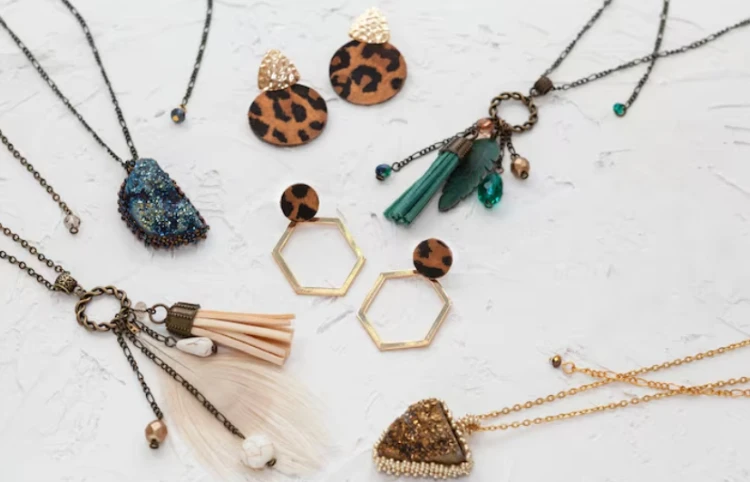
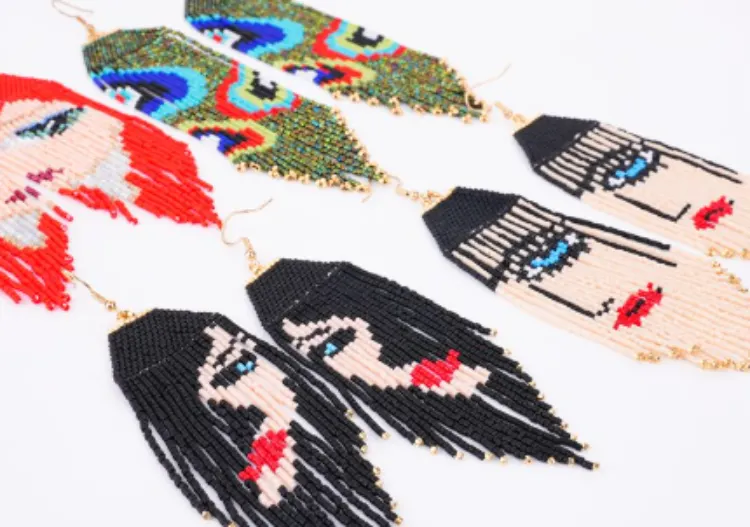
For example, a finely woven glass-bead earring can create a detailed color pattern with relatively low weight. A semi-precious-stone bracelet may support a different price position and needs its own checks for bead variation, stringing, and clasp security. A metal chain necklace with a beaded pendant brings another set of decisions around plating, jump rings, and finish consistency.
Do not rely on a material name alone. Ask what parts of the piece are visible, what parts carry load, and what parts are most likely to rub against skin, clothing, or other items in a display. That discussion makes the sample review far more useful.
Request a Construction Map With the Sample
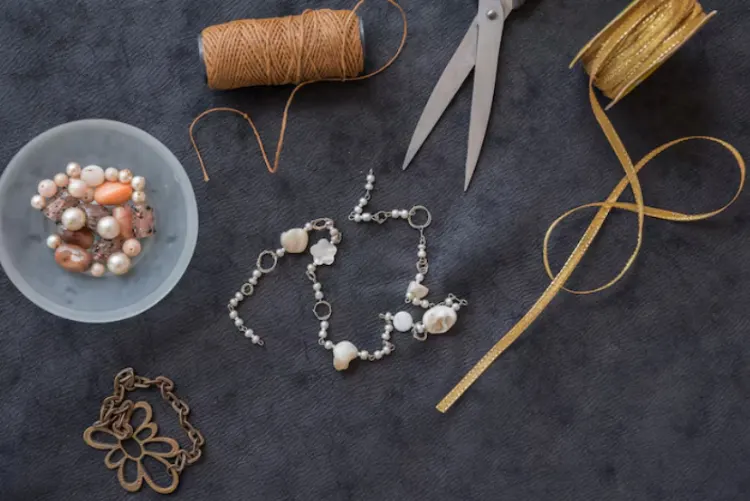
A construction map does not need to be a formal engineering drawing for every style. It can be a clear supplier note identifying the main bead type, wire or thread, metal findings, clasp, chain, and decorative components. For a more complex piece, ask for the dimensions and the approximate finished weight as well.
The buyer should then inspect the sample for the points that customers actually notice:
- Are colors and bead finishes consistent across the set?
- Does the closure work repeatedly without catching or opening unexpectedly?
- Do dangling elements sit evenly and move as the design intends?
- Are sharp edges, excess adhesive, loose threads, or unfinished wire ends visible?
- Does the product feel proportionate when worn rather than only when photographed?
LANCUI’s existing guide on glass versus plastic seed beads can help a buyer frame the material discussion before selecting a beaded range.
Build an Assortment That Gives Customers Choices Without Repetition
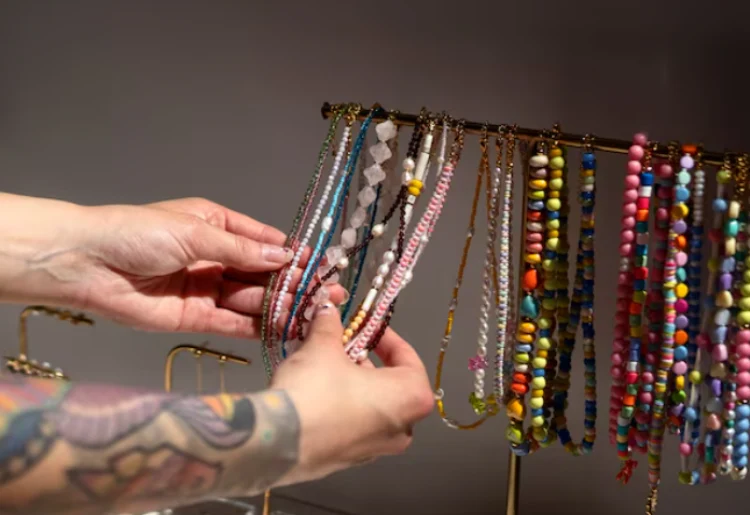
When creating an assortment, each product should have a role in the range. Displaying the same style of bracelet in 6 near identical colors in a repeat formation can make for a busy looking display and fails to give the customer a reason to compare. A better range would contain an every day, approachable product, a gift product, a statement product and a few connecting products to the color story.
One simple approach is to organize the line around a color family and then vary the scale of the beadwork. A small bracelet can introduce the palette. Matching earrings add a gift option. A longer necklace or fringe earring gives the collection a focal point. The pieces do not have to match perfectly; they need to look like they were selected by the same buyer for the same customer.
Keep the first range manageable. When a retailer can explain why each product is there, the store team can merchandise it, photograph it, and recommend it with more confidence.
Test Ready Stock and Custom Development Differently
Ready stock is useful when speed and small-scale market testing matter most. The buyer can choose from available designs, order a focused selection, and learn which styles attract attention. It is a practical route for adding seasonal color or filling a gap in an existing assortment.
Custom development serves a different purpose. It gives the brand more control over the color palette, components, pattern, packaging, and collection identity. That route requires a better brief, more sample feedback, and enough time for design refinement before production.
Many buyers combine the two. They use ready stock to test an aesthetic direction, then develop the best-performing ideas into a custom range. LANCUI describes both ready-stock and OEM/ODM services on its services page, so the inquiry should make clear which path is being requested for each group of products.
Treat the Sample as a Decision Point
A sample should answer more than “Do we like it?” Record decisions in writing: approved color reference, acceptable variation, dimensions, materials, findings, packaging, and any changes required before production. If several people are reviewing the sample, consolidate feedback into one marked-up response. Conflicting comments from design, buying, and marketing can otherwise create avoidable revisions.
For handmade details, keep a distinction between approved natural variation and a defect. Some slight variation may be part of the character of a hand-finished product. Loose construction, mismatched components, or a closure that does not function correctly are not character; they are issues to resolve before release.
Plan for Reorders While You Are Choosing the First Order
The first purchase tells you what customers might want. A reorder program tells you whether the collection can become a stable part of the business. Ask the supplier which materials or components are likely to be recurring and which are seasonal, limited, or subject to color-batch variation.
It also helps to identify the products that must remain available. A best-selling bracelet may be the piece that leads shoppers to the matching earrings and necklace. If it disappears without notice, the rest of the range can lose some of its merchandising value.
Keep a simple product record for every approved SKU: photo, material summary, color code, construction notes, packaging choice, approved sample date, and reorder observations. This record becomes valuable when a collection returns next season or when a new buyer takes over the account.
Make Packaging Part of the Product Decision
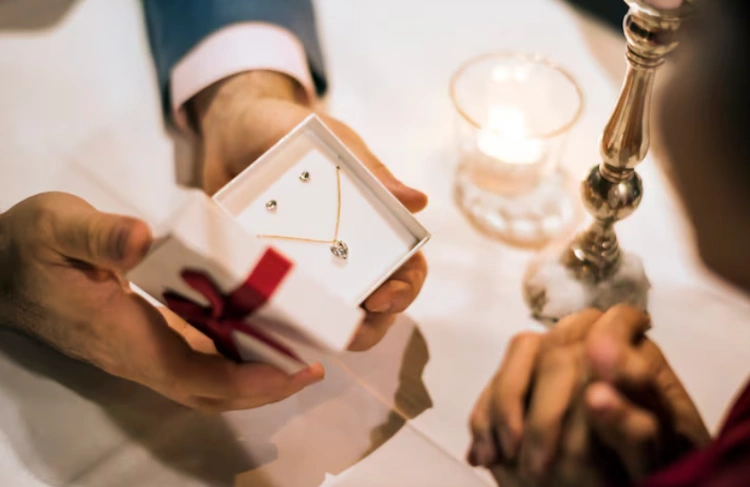
Packaging influences how a beaded piece arrives, how it is displayed, and how it feels when given as a gift. A lightweight earring may need a card that keeps the pair aligned. A necklace may need a backing or pouch that reduces tangling. A bracelet set may need a presentation that prevents parts from rubbing together in transit.
The packaging choice should be reviewed with the actual product inside it. A box that photographs well but lets a necklace move freely is not finished packaging. The buyer should check whether the product stays in place after ordinary handling and whether the packaging fits the intended display environment.
For a branded collection, include logo placement, color references, insert material, and any required care or product information in the request. LANCUI offers packaging support as part of its service information, which can simplify the discussion when jewelry and presentation need to be evaluated together.
Send a Sourcing Inquiry That Produces a Useful Reply
The best supplier inquiry is specific enough to price and sample, but not so polished that it hides unresolved choices. Include the collection brief, reference images, product categories, preferred materials, target market, estimated first-order quantity, desired sample timing, and packaging needs.
For each style, ask the supplier to confirm what they can make, what needs development, what information is still missing, and what they need from the buyer before quoting. This creates a real working conversation instead of an exchange of generic catalogs.
LANCUI works with brands, designers, and retailers on handmade jewelry development and production. To discuss a beaded collection, send the product direction, reference images, intended product types, material preferences, and packaging requirements through the LANCUI contact page.
Frequently Asked Questions
What should a retailer ask before buying wholesale beaded jewelry?
Ask about the materials, construction, product dimensions, packaging, sample process, available designs, and the information needed to support a reorder. The most useful questions are tied to the collection brief and the way the product will be sold.
Is ready stock or custom development better for a first collection?
Ready stock is useful for faster testing and smaller assortment additions. Custom development is useful when the brand needs a defined color story, design language, or packaging treatment. A mixed approach can work when the buyer wants to test a direction before developing exclusive pieces.
How can buyers check the quality of beaded jewelry samples?
Review color consistency, bead alignment, thread or wire finishing, clasp function, comfort, visible findings, and how the product sits when worn. Test the piece in its proposed packaging as well as on a display card or fixture.
What information helps a supplier quote a beaded collection?
Provide reference images, product types, materials, dimensions where known, color direction, estimated quantities, target market, packaging needs, and the preferred route: ready stock, OEM, or ODM development.