Selecting the correct bead substrate directly dictates product longevity, retail pricing tier, and customer return rates for fashion brands. Wholesale buyers often evaluate whether lower-cost synthetic resins can replace traditional glass without sacrificing aesthetic value. Evaluating glass seed beads against plastic options requires examining molecular density, light transmission, and mechanical wear properties during assembly. At LANCUI, our workshop specializes in handmade accessory production, pairing skilled bead-weaving artisans with systematic quality controls. With over a decade of overseas collaboration experience, our facility supports international brands through custom OEM and ODM manufacturing alongside agile ready-stock sourcing.
Are Plastic and Glass Seed Beads Really That Different?
While plastic and glass beads look about the same in catalog thumbnail shots, they act very differently in the process of manufacturing, transportation and use. Understanding these physical characteristics is crucial in beaded fringe earring sourcing in order to avoid quality failures in finished retail collections.
Chemical Composition and Material Density Variations
Inorganic silica glass provides significantly higher material density and molecular stability than organic petroleum-based synthetic polymers like polystyrene or acrylic. The higher mass per unit volume in glass ensures that strung components hang straight rather than curling under thread tension. Additionally, glass maintains thermal stability during soldering or torch cleaning processes near metal findings, whereas synthetic plastics deform under low heat exposure.
Surface Optical Clarity and Light Refraction Qualities
Glass has a higher refractive index than injection-molded plastics. This characteristic of glass allows the glass beads to reflect interior surface points of sharp ambient light, thereby adding depth to finishes that are dyed or silvered. Plastic surfaces rely on topical spray coatings that easily rub off over time, whereas colored glass retains its shade because colorants fuse directly into the molten silica during bead production.
Reference Analysis on Synthetic Bead Comparison Standards
Evaluating synthetic alternatives requires analyzing density, transparency, and production costs. Reviewing our LANCUI synthetic bead comparison guide outlines how acrylic and general plastic resins differ in optical clarity, providing baseline parameters for synthetic bead material comparison across commercial accessory lines.
How Do Physical Performance Traits Impact Jewelry Quality?
Material properties affect the finished product and determine how it will drape, feel on skin and withstand friction and environmental influences. Choosing the right substrate for your accessories will influence the satisfaction of end customers as well as the positioning of your retail brand.
Superior Weight, Tactile Handfeel, and Drape in Fringe Designs
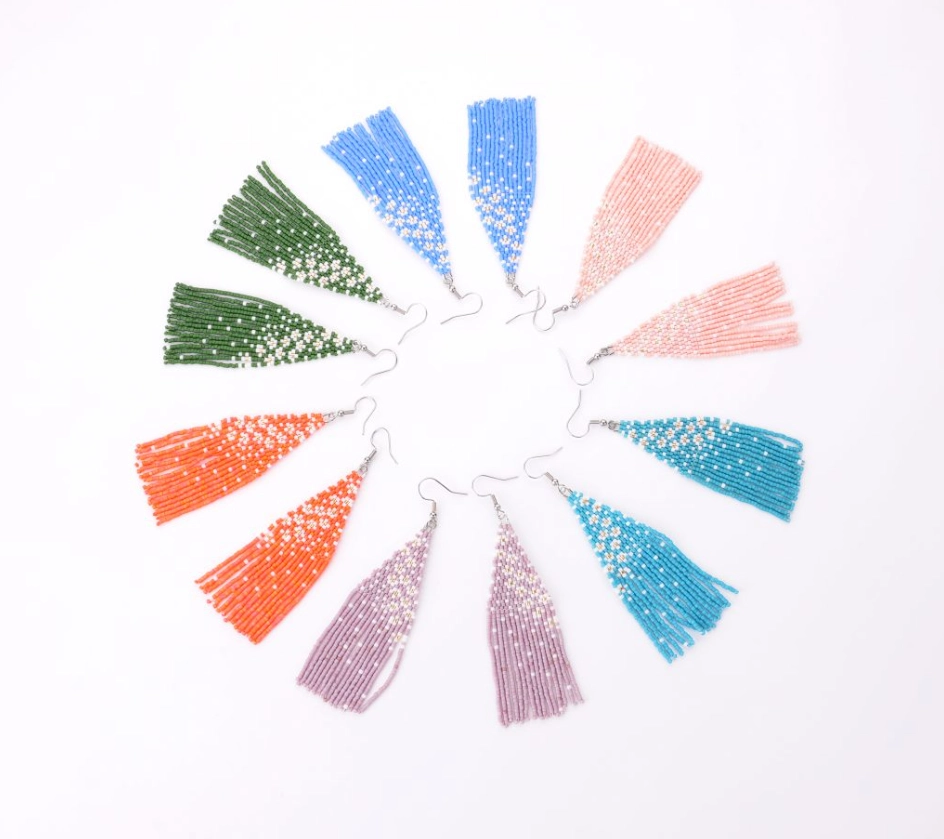
In long drop earrings, individual bead weight creates fluid movement. The additional mass of glass allows thread-strung tassels to swing naturally and return to vertical alignment. For instance, in our Spirit of Nature Boho Beaded Fringe Earrings, the natural weight of glass seed beads creates an elegant drape that synthetic plastic cannot replicate without adding unnatural bulk.
Scratch Resistance, Surface Hardness, and Long-Term Color Retention
Silica glass has a Mohs hardness of 5.5 to 6.0, whereas synthetic plastics have a hardness of 2.0 to 3.0. This difference in hardness leads to surface micro-scratches on the plastic beads by simple friction against clothing or other jewelry pieces. These micro-scratches will dull the outer surface of the plastic beads, causing them to lose their luster within a few months. In contrast, glass is abrasion resistant and retains its original luster and finish over extended periods of time.
Structural Uniformity in Intricate Geometric Weaving
Bead-weaving, whether on- or off-loom, relies on a number of factors including the outer diameter of the bead and the center drill hole. The majority of plastic beads are injection-molded and therefore often have molding flash, irregular hole sizes and burrs. These can easily cut through nylon weaving threads. Higher quality glass seed beads are made in Japan and in the Czech Republic. These are heat-polished and are dimensionally sized in a very precise manner, allowing for very tight off-loom bead-weaving. In our Aztec Triangle Beaded Statement Earrings, uniform glass bead dimensions ensure flat geometric alignment without structural warping.
Which Bead Material Suits Your Target Retail Market?
Commercial buyers must align material selection with target retail price points, target demographics, and intended wear scenarios to maximize gross margins.
Premium Bohemian and High-End Fashion Line Positioning
Glass beadwork offers tactile weight, cool skin temperature and vibrant light play. The use of glass seed beads in intricate designs, such as our Ethereal Elegance Beaded Tassel Earrings, provides substantial value to touch and therefore justifies higher retail prices. These higher prices are suitable for boutiques operating in the mid-to-high price market and the products need to reflect substantial value to the customer. Glass seed beads enable the creation of rich color and hand-woven artistry, enabling higher retail prices for true works of art.
Mass-Market Promotional and Lightweight Seasonal Collections
Plastic beads offer distinct advantages for budget-conscious, high-volume promotional items or children’s accessory lines where low unit cost and minimal weight take precedence. Plastic reduces shipping weight for direct-mail e-commerce orders. However, for fashion brands aiming to establish lasting brand equity, relying exclusively on plastic can lead to perceived quality issues.
Direct Comparison of Material Parameters and B2B Margins
Evaluating physical parameters against commercial outcomes clarifies how material choice affects production costs and retail viability.
| Physical / Commercial Parameter | Glass Seed Beads | Plastic / Synthetic Resin Beads |
|---|---|---|
| Density & Drape | High density; natural fluid drop in fringe | Low density; lightweight, prone to static drift |
| Scratch Resistance | Mohs 5.5–6.0; highly scratch-resistant | Mohs 2.0–3.0; easily scratched by friction |
| Colorfastness | Fused mineral pigments; fade-resistant | Topical spray coating; prone to chipping |
| Thermal Stability | Heat resistant during soldering/cleaning | Melts or deforms under low heat exposure |
| B2B Margin Potential | High perceived value; supports higher markups | Low price threshold; limited margin elasticity |
How Can Wholesale Buyers Inspect Glass Seed Bead Inventory?
To avoid defects, thread breakage and shipment rejections before mass shipment, systematic quality verification is established.
Four-Stage Quality Inspection Procedure for Bulk Orders
Bulk glass seed beads are tested for quality at 4 different production stages: Raw Material, Production Process, Final Product and Reporting. The beads are inspected for hole smoothness, color consistency within a dye lot as well as between different dye lots and the thread tension while assembling the beads. If any defects are found they are caught prior to packaging the finished product for export.
Environmental Safety and Chemical Compliance Verification
International market entry requires strict adherence to regional chemical regulations, such as California Proposition 65 and European REACH standards. Verifying that glass glazes are lead-free and cadmium-free protects brands from regulatory penalties. Partnering with facilities that maintain BSCI-certified factory auditing standards ensures both environmental compliance and ethical workplace practices throughout the production chain.
Custom Color Matching and Agile Sample Development
Custom accessory collections often require exact pantone matching or unique surface finishes like matte, luster, or AB coating. Working with an experienced partner enables rapid custom beaded earring sample turnaround. Artisans can assemble prototype samples, adjust thread gauges, and finalize bead patterns within days, shortening time-to-market for seasonal product launches.
How Does LANCUI Support Your Bead Accessory Sourcing?
Scaling a commercial beadwork line requires bridging handcrafted artisan skill with structured factory management.
Comprehensive OEM and ODM Jewelry Manufacturing Services
Serving as an experienced oem bead jewelry manufacturer, LANCUI combines traditional manual weaving skills with modern production workflows. Our technical design team translates buyer sketches, tech packs, or physical samples into market-ready collections while maintaining strict material standards across bulk production runs.
Ready Stock Catalog and Auxiliary Photography Solutions
To support agile inventory management, our ready-stock program offers trend-focused beaded lines ready for immediate dispatch. Additionally, we provide auxiliary services including professional product photography, technical illustration, custom packaging design, and sample development to streamline your product launch workflow.
Direct Service Inquiries and Team Contact Options
Between glass and synthetic substrates, one selects by trying to weigh up the various aesthetics on offer against weight and then price at retail.
Navigating material selections, sample reviews, or custom OEM production schedules requires direct technical alignment with experienced workshop managers. If you are developing a new beaded accessory collection or evaluating material upgrades for your existing product line, please contact our engineering and design team to discuss your project specifications or request physical product samples.
FAQ
Q: Are glass seed beads heavier than plastic beads?
A: Yes, glass seed beads are much heavier than synthetic plastic beads. Because of their higher material density, glass seed beads create natural drape and fluid movement in such items as earrings and in multi-strand necklaces.
Q: Do glass seed beads fade or chip over time?
A: High-quality glass seed beads are made with fused colorants. The color and surface of these beads will never fade or wear off, unlike plastic beads with a topical spray finish. The spray on these beads will wear off quickly under friction or sweat, but the colored glass will last forever as long as the beads are not subject to excessive surface scratching while being worn.
Q: Can a manufacturer produce custom glass seed bead jewelry in bulk for wholesale orders?
A: Yes. Skilled manufacturing workshops can easily combine artisan hand-weaving teams with standardized quality control processes, allowing brands to produce large quantities of their handmade glass seed bead jewelry in Bulk Wholesale. The resulting Handmade Glass Seed Bead Jewelry will be consistent in size, thread tension, and pattern alignment, creating identical pieces, each unique, in a large Bulk Wholesale quantity.