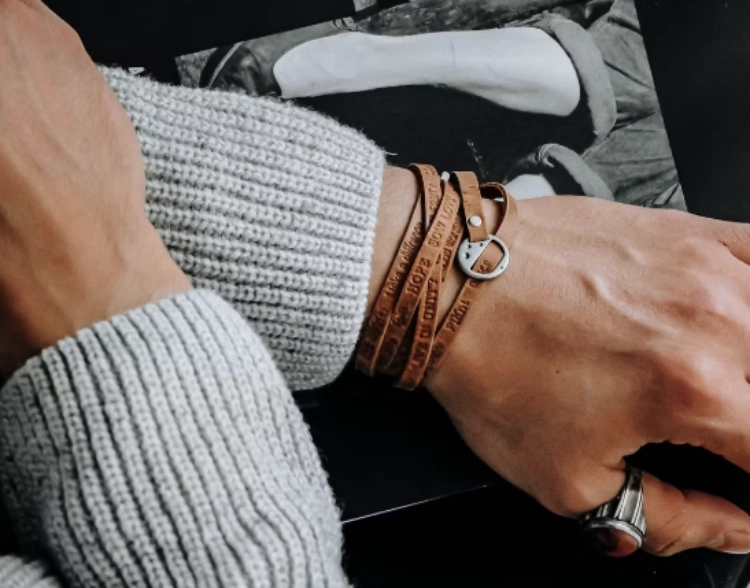
Distinguishing true craftsmanship from factory output requires examining physical construction details that automated machinery cannot replicate. Retail buyers, boutique owners, and merchandise managers frequently encounter products tagged as manual creations that actually originated from mass casting molds. Identifying authentic handmade jewelry is essential to protecting retail margins and maintaining brand integrity. At LANCUI, our production team relies on skilled artisans who bring years of weaving and fabrication expertise to international accessory collections. Evaluating structural nuances, tool impressions, and material assembly methods clarifies whether a piece truly carries human craftsmanship.

What Standards Define Authentic Handmade Jewelry?
Clear regulatory boundaries and physical production methods distinguish genuine manual fabrication from commercial machine assembly.
FTC Compliance and Legal Industry Definitions
Items can be marked with handmade labels, handmade entirely by hand or made with hand-guided tools. Items with designs made using casting molds, automatic stamping presses and other mechanized assembly lines are not allowed to be marked with handmade labels.
Handmade Versus Mass-Produced Structural Differences
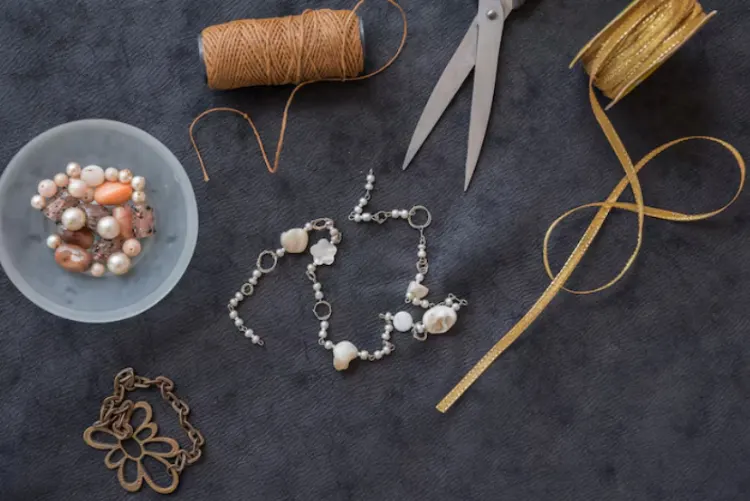
There is a significant difference between handmade items and mass-produced articles. First of all, the speed of production is different. An artisan spends 2-3 days hand-weaving beads for a single, unique piece, like a necklace. In contrast, an automated press line in a factory can produce hundreds of identical articles in just one hour. Such articles are devoid of variations that occur naturally in handmade items.
Reference Analysis on Industry Market Observations
Analyzing physical attributes across global markets reveals consistent patterns in trade terminology. Reviewing the detailed LANCUI handmade identification guide provides practical context on how legal definitions translate into real-world product evaluation for commercial inventory.
How Do You Spot Authentic Artisan Quality in Physical Pieces?
Identifying human craftsmanship involves examining very fine surface details, joint connections and the parts that have been assembled together.
Organic Micro-Imperfections and Beadwork Texture
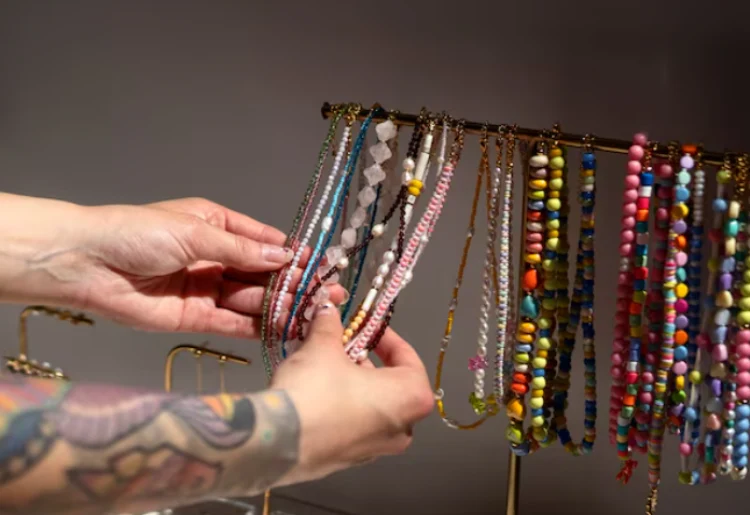
All Manual Beadwork products have inherent variations in thread tension and individual bead placement, which cannot be replicated on a machine loom. For example, our current Miyuki Bead Handmade Woven Evil Eye Necklace, has been individually strung with Japanese glass seed beads, giving the product a very flexible, ‘woven’ drape, with minute alignment variations, which would only be achieved by Human Assembly.
Color Vibrancy and Hand-Assembled Structural Symmetry
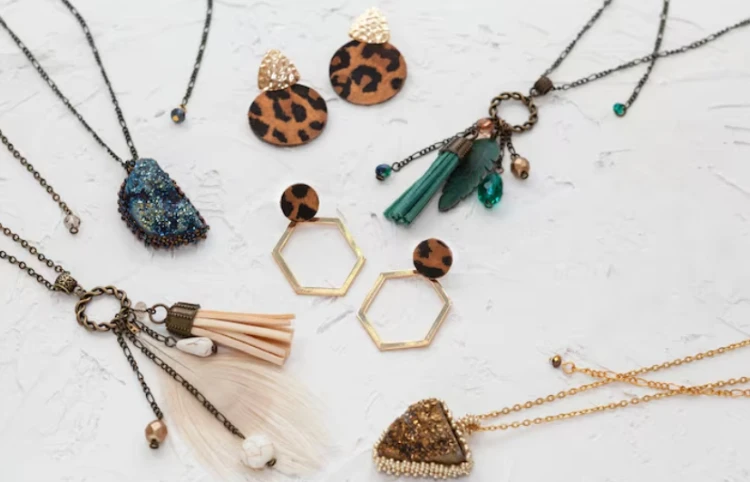
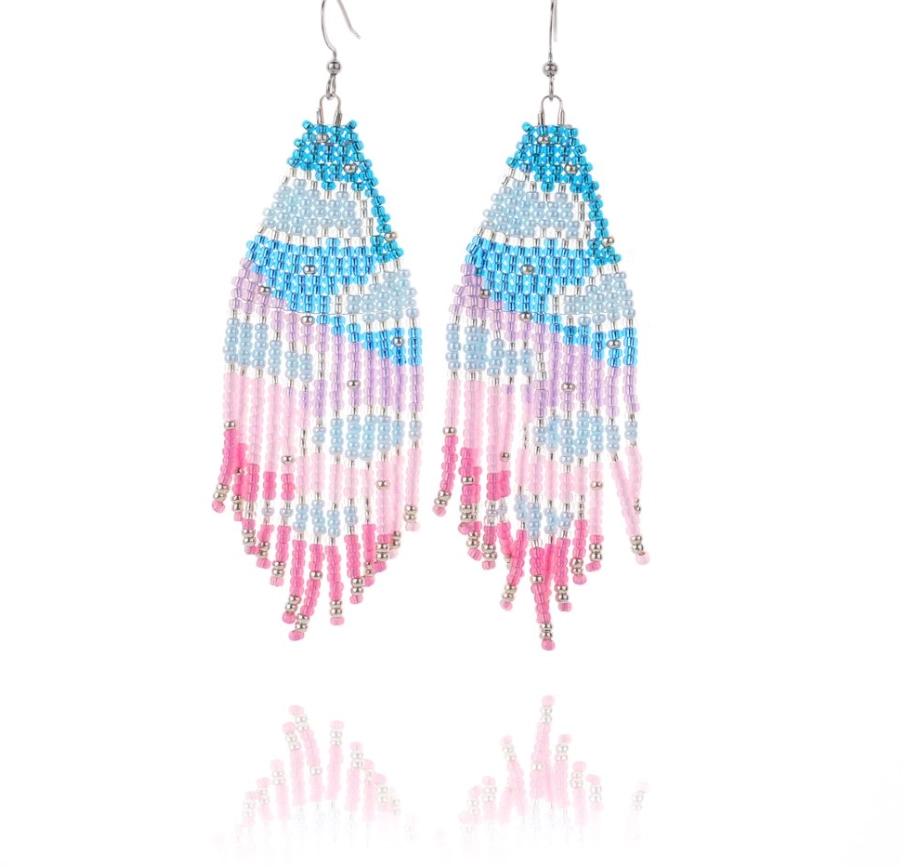
Drop earrings and tassel designs of an artisanal nature have been carefully balanced by hand, rather than being cut to laser precise mathematical perfection. The Radiant Kaleidoscope Handcrafted Beaded Earrings illustrate the above principle, with the multi-colored glass beads being carefully layered and the fringe elements being hand-tied to provide the ultimate in vibrant structural character.
Maker Marks and Custom Hallmarking Signs
Find out where your jewelry was made by looking for stamped initials, artisan logos, and regional metal hallmarks. Each hand-struck stamp is slightly different in terms of how deep it is struck and the orientation of the stamp, as opposed to being laser printed. These individual marks were made by a jeweler using their individual hand tools.
Why Does Genuine Handmade Jewelry Offer Higher Commercial Value?
Investing in genuine manual craftsmanship for real product advantages in retail for better stock and better branding.
Superior Material Integrity and Long-Lasting Durability
Artisanal construction eliminates hidden structural flaws common in mass casting. Sequential hand inspections during assembly ensure clasps, jump rings, and wire wraps withstand repeated consumer wear without unexpected mechanical failure.
Uncovering Hidden Sourcing Risks: Mold Porosity vs. Hand Assembly
Procurement managers often discover too late that low-cost “handmade-style” items rely on mass casting zinc alloys. These cast components suffer from micro-porosity—hidden air pockets created during rapid cooling. Under retail shelf display or humidified shipping conditions, these cast pieces develop brittle stress fractures and sudden clasp failures, driving customer return rates up to 4-7%. Authentic hand-assembled wiring and woven jump rings distribute mechanical tension evenly, keeping structural return rates below 0.2% across seasonal retail cycles.
Ethical Supply Chain and Responsible Manufacturing
Commercial buyers increasingly demand traceable, responsible sourcing. Maintaining BSCI-certified factory auditing standards alongside eco-friendly packaging options ensures that hand-assembled lines fulfill modern environmental and labor compliance requirements across North American and European retail markets.
Distinctive Storytelling and Uniqueness for Retailers
Retailers stocking genuine handmade jewelry gain a distinct narrative advantage. Because micro-variations make every piece unique, store owners can market exclusive inventory that resists direct price comparison against mass-market catalog items.
How Can Retailers Inspect and Source Quality Handmade Collections?
Implementing structured evaluation procedures helps procurement managers verify artisan supplier capabilities before committing to bulk order volumes.
Systematic Six-Point Sourcing Checklist for Buyers
Evaluating physical samples against defined criteria prevents commercial quality discrepancies during high-volume shipments.
| Inspection Criterion | Manual Craftsmanship Traits | Mass-Production Indicators |
|---|---|---|
| Surface Finish | Subtle tool marks, organic hammered waves | Perfectly uniform, mirror-stamped flat surfaces |
| Symmetry | Natural micro-variations between paired items | Absolute mathematical identicality |
| Joint Construction | Hand-soldered links, wrapped wire connections | Molded single-piece die-cast connectors |
| Bead Alignment | Slight thread tension shifts, individual threading | Rigid mechanical alignment on plastic cord |
| Hallmarking | Stamped maker marks with varied depth | Uniform laser-etched digital typography |
| Customization | Flexible adjustments to clasps or dimensions | Rigid fixed designs requiring mold rebuilds |
Small-Batch Customization and Agile Sample Development
Genuine artisan production facilities offer high flexibility for custom jewelry sample development. During a recent client project, our workshop adjusted beadwork patterns and custom engraved charm clasps for an order of 200 bracelet units within one week, demonstrating an agile turnaround impossible on automated casting lines.
Four-Phase Quality Control and Production Monitoring
Conducting systematic artisan jewelry quality inspection requires a structured four-stage process: Raw Material Inspection, Process Monitoring, Final Inspection, and Reporting. To safeguard commercial orders, our workshop enforces strict physical metrics during the 4-phase QC process. We evaluate stringing material using high-tensile 0.3mm nylon-coated stainless steel wire rated for up to 8 kg of pull resistance. For beaded lines, we exclusively source Japanese Miyuki 11/0 seed beads, maintaining a strict size tolerance within ±0.05mm to ensure structural uniformity. Bulk shipments undergo final inspection following ISO 2859-1 (AQL 2.5) standards, ensuring that defect rates in manual knotting and clasp assembly remain strictly below 0.5%.
How Does LANCUI Support Your Handmade Jewelry Brand Growth?
Partnering with an experienced manufacturing team bridges the gap between traditional manual handiwork and reliable commercial scaling.
Comprehensive OEM and ODM Customization Services
Operating as an experienced oem handmade jewelry manufacturer, LANCUI brings over ten years of international design collaboration to custom accessory development. Our production workflow combines artisanal handiwork with scalable output to realize original buyer sketches while maintaining strict quality standards.
Rapid Ready Stock Service and Global Partner Network
To support fast-turnaround inventory needs, our ready stock program offers trend-driven hand-woven lines available for immediate shipment. This enables retail partners to test emerging styles in local markets without navigating extended manufacturing lead times.
Direct Service Inquiries and Team Contact Options
Building a distinctive handmade jewelry collection requires clear technical alignment between design teams and workshop craftspeople.
Navigating product selection, material specifications, or custom order quantities requires direct coordination with experienced workshop managers. To review your inventory requirements or request detailed sample catalogs, please contact our team to discuss your project details.
FAQ
Q: Is handcrafted jewelry the same as handmade jewelry?
A: Not entirely. Handmade items are crafted 100% by hand or hand tools from raw components without molds. Handcrafted items may incorporate machine-made components, such as die-cut chains or cast settings, that artisans subsequently assemble by hand.
Q: Why does handmade jewelry cost more than mass-produced pieces?
A: Manual fabrication requires significantly more labor time, technical skill, and individual attention. An artisan may spend several days weaving a single piece, whereas automated equipment stamps out hundreds of factory items in minutes.
Q: Can handmade jewelry be produced in large batches for wholesale orders?
A: Yes, structured workshop workflows allow craft teams to assemble handmade jewelry in commercial wholesale quantities while preserving individual hand-crafted character across the batch.