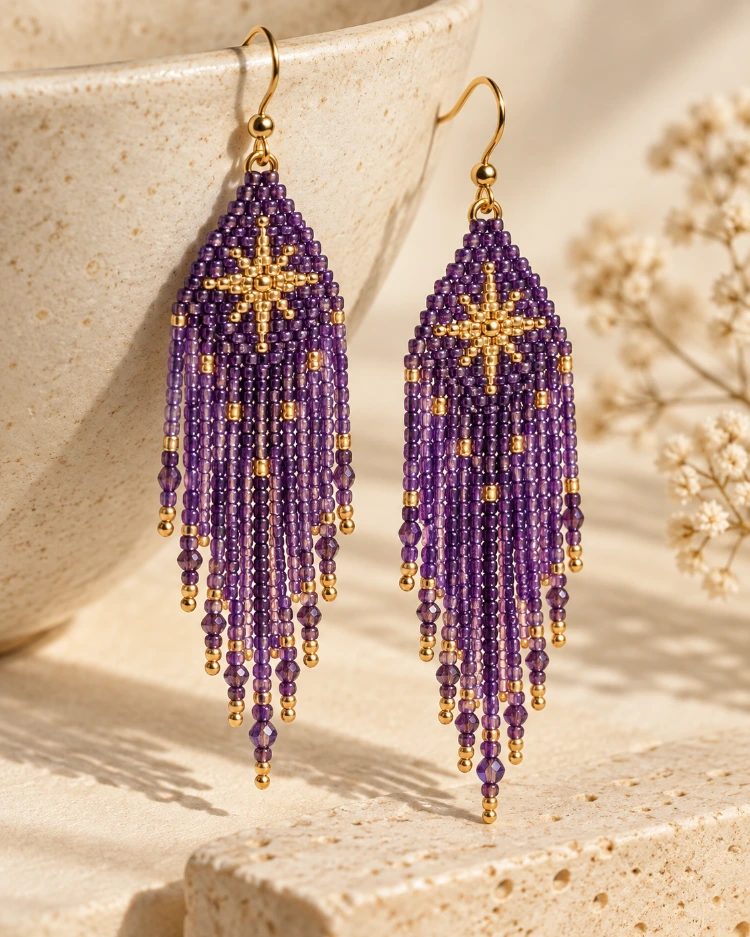
The approved sample has a warm yellow hook. On the order sheet it is “gold color”; in page copy, “metal hook.” Neither note is wrong, but they answer different questions: one records shade, the other gives a broad part description. The problem starts if an editor joins them into “gold-plated” without a specification tying that finish to the hook.
Key Takeaways
- “Gold-tone” describes an approved appearance; it does not identify the metal or coating.
- “Gold-plated” and “gold-filled” require records for the named component and construction.
- Keep the supplier detail, sample image and listing language tied to the same revision.
What each term tells the buyer
Gold-tone jewelry is jewelry with a gold-like appearance. It does not identify the metal beneath the finish. Gold-plated jewelry is a base-metal item carrying a gold-alloy layer; the process and layer details determine whether that wording is appropriate. Gold-filled jewelry is built differently and follows a separate marking rule. In a listing, these are three descriptions of three different facts, not stylistic variations on “yellow.”
| Listing term | Claim made to the customer | Evidence to keep with the SKU |
| Gold-tone | Appearance resembles gold | Approved sample or color reference |
| Gold-plated | A gold-alloy layer covers the named base metal | Supplier material and process specification for that part |
| Gold-filled | A mechanically applied gold-alloy layer meeting the relevant marking rule | Construction and weight information for the item |
If “gold color” is all the supplier has recorded, the listing has a clean way forward: describe the beadwork and call the hook gold-tone. That wording follows the approval without asking a photo to prove how the finish was made.
Check the finding, not just the finished earring
On a long fringe earring, the hook can disappear behind the beads in a straight-on photograph. The purchase order still needs its own line for the part number, base metal, requested color and surface process. “Gold hook” bundles those details together, so the next editor cannot tell whether it records the color, construction or both.
For a component entry that will survive a reorder, the useful fields are:
– Hook number and supplier revision
– Base metal, or “not yet confirmed”
– Approved color reference
– Surface process and the specification that supports it
That record is more informative than adding “gold” to a generic finish field. It also makes a missing answer visible before the product copy is approved.
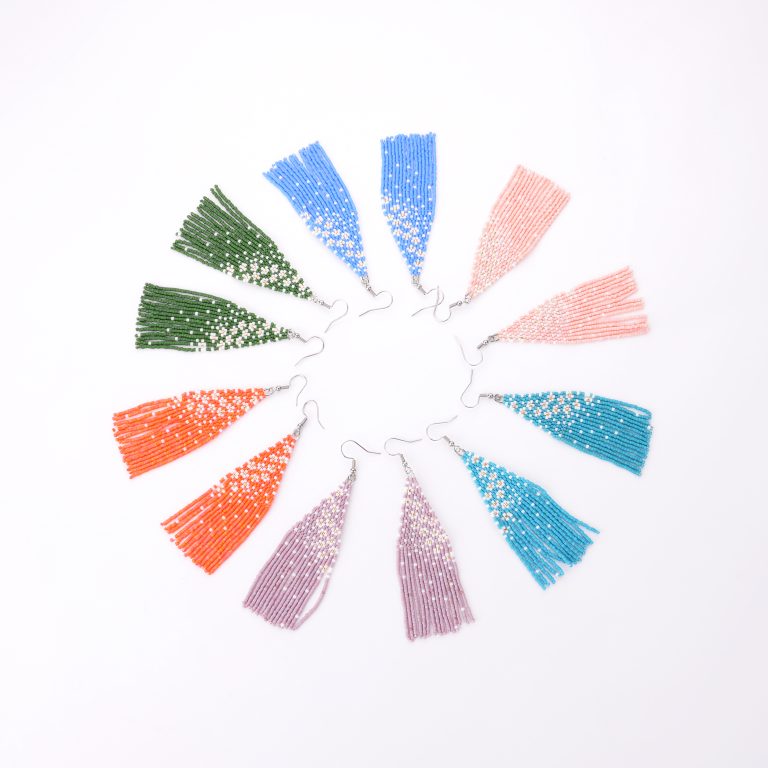
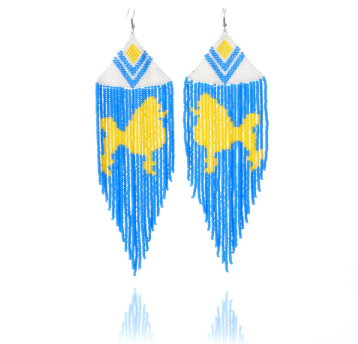
The Spirit of Nature fringe earrings are a useful example of how much can be said without guessing. LANCUI lists glass seed beads, metal hooks and an approximate size of 12 × 4 cm. The product description names orange, purple and blue beadwork, handmade construction and flowing fringe. Those are product details supported by the listing. It does not identify the hook’s alloy or coating, so “metal hook” remains the accurate material description until the supplier specification says more.
Across its handmade jewelry range, LANCUI works with semi-precious stones, Miyuki beads, stainless steel, alloy and cotton threads. That range can help frame a custom request, but it does not identify the material in the Spirit of Nature earrings or Hook 03. The finding still needs its own supplier specification.
What the product photo can and cannot establish
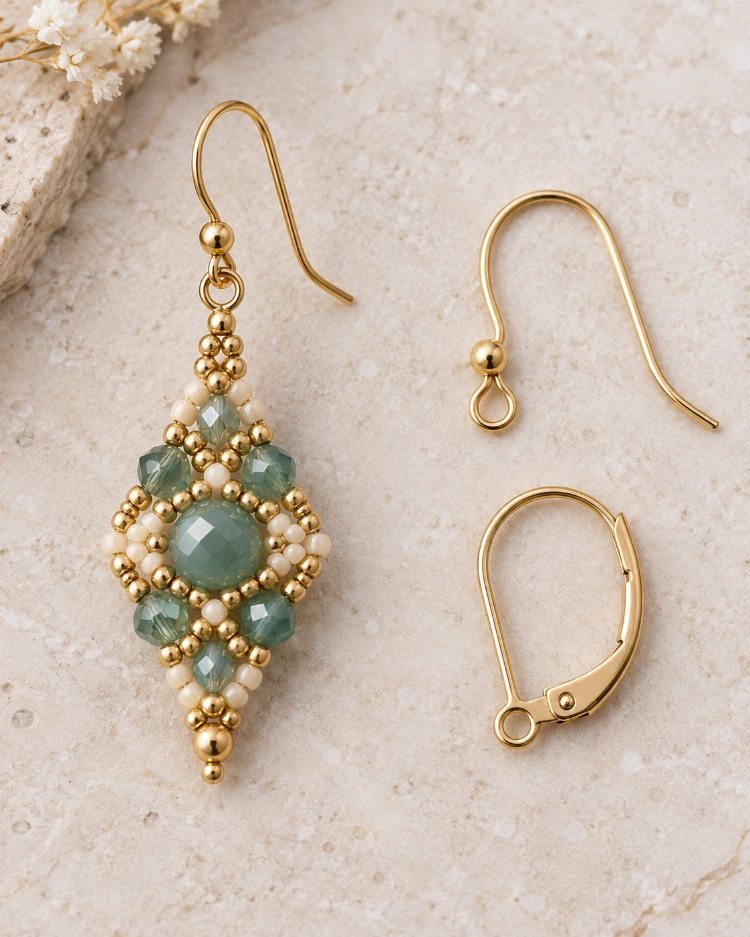
The color sample is best compared under the same light used for approval. A warm studio can make a hook read yellower than it does by a window, while a side view answers another question altogether: does the finding sit cleanly beside the top bead? Useful image evidence, yes. A photograph does not establish the base metal, karat, plating thickness or application method.
Put the hook number on the drawing and keep that drawing with the sample revision. Then a supplier reply can refer to the same finding the buyer reviewed. Without that link, even a correct answer can drift: material details for Hook 05 may be pasted into a listing that still shows Hook 03.
U.S. gold claims depend on construction
The FTC consumer guide to gold jewelry describes several plating methods and notes that plating can wear with use. Its “gold electroplate” description combines three conditions: gold of at least 10 karats, a layer at least 0.175 microns thick, and application to base metal by electrolysis. The term carries process and material information that a color approval alone does not supply.
For terms such as “gold plated,” consult the FTC Jewelry Guides alongside eCFR Section 23.3. The wording depends on the karat designation, coverage and reasonable durability of the layer on the part being named. “Gold color” is not enough information to resolve those points; it records the requested appearance, nothing more.
Gold-filled calls for a different check. The FTC guide describes a mechanically applied gold-alloy layer and says that, when it is below one-twentieth of the item’s metal weight, the marking should show the fraction. A close-up cannot tell the editor whether the weight condition is met. The guide also describes “gold flashed” and “gold washed” as thin electroplating that wears away faster than gold plate. Those terms should stay as written in the supplier file; editing them down to “gold-plated” would change the claim.
A component record that is still incomplete
Take an illustrative component record: Hook 03, stainless steel, “gold color,” coating not supplied. The editor can name the steel and describe a gold-tone finish. If a supplier document later confirms a coating, the new wording belongs to Hook 03 and to the revision that uses it. A visually similar Hook 05 does not inherit that information by resemblance.
At sample approval, shade and material can have different statuses. A buyer may sign off on the color while the alloy or coating remains unanswered. Keep both entries on the same revision. An open field makes that boundary visible to the copy editor; a vague “approved” note can hide it.
Keep the description current through reorders
A replacement finding can arrive with a new supplier number while the rest of the earring stays unchanged. The SKU record, sample photo and caption need to show which hook was approved, especially if the new part has a different material or surface process.
For the next revision, match the part number on the drawing or bill of materials to the supplier’s reply. Check the sample against the approved color reference. Then keep the description, image and approval record together under the same SKU revision. If the hook number changes again, update the details for that part only. Bead color and fringe dimensions do not need to be rewritten unless they changed too.
LANCUI describes OEM as production to a buyer’s established design and specifications, carried out by skilled artisans and backed by a supplier network. The company says its production can handle varied order volumes. ODM adds design development: its designers use trend analysis and a client’s brand identity to develop a product, then build prototypes and samples before production. That distinction matters when a buyer is choosing a new hook. If the component is already specified, OEM carries the requirement into production; if the design itself needs work, ODM includes development and a sample review.
The company describes more than a decade of experience in handmade jewelry and accessories. Its first overseas collaboration was with Hipenama, a brand created by Parisian designers Delphine and Jenny; LANCUI says that project helped establish its international work. The company presents its production as a combination of artisanal craftsmanship and large-scale capacity. That supplier background helps a buyer understand the custom-development offer, but it still does not answer what metal coats Hook 03.
LANCUI’s quality inspection service covers raw materials, production monitoring, and finished-product checks for appearance, dimensions and function. The company describes multiple inspection phases and says it provides detailed inspection reports and communicates feedback with clients. Those checks give the approved finding a route through production. They do not establish its plating unless the relevant material and process appear in the component record.
For product presentation, LANCUI lists photography with models, image post-processing, technical drawings, artistic illustrations and renderings, quick-turnaround sample making, and custom packaging. Those services can support the document set around a revised hook: the drawing labels the part, a new sample makes the clearance visible, and its side-view image can match the approved revision. LANCUI describes packaging tailored to the client’s brand and product, with eco-friendly material options, product protection for transport, display choices and capacity for small batches or bulk orders. None of these records replaces the supplier’s material information. The About Us page outlines LANCUI’s custom jewelry work.
Copy the details the record supports
For the current product, a listing can state: handmade glass seed bead fringe earrings, metal hooks, approximately 12 × 4 cm. If the approved sample has a gold-colored hook, “gold-tone hook” adds the appearance detail without making a claim about the metal layer. The Spirit of Nature product page supports those bead and dimension details.
With only a color approval, “handmade glass seed bead fringe earrings with gold-tone metal hooks” stays within the record. “Gold-plated hooks” needs process and material details for that hook; the more specific-sounding phrase is not a substitute for them.
If the supplier later confirms a stainless-steel base but leaves surface treatment unanswered, name the steel and retain gold-tone. If the supplier documents a plating process for Hook 03, update the description for that component and keep the supporting record with the SKU. “Hypoallergenic” and “real gold” need their own evidence; neither follows automatically from a polished appearance or a plating claim.
For a product-specific confirmation, send LANCUI the SKU or finding number through the contact page and request the material and finish details for that part. Keep any resulting change on the matching order, sample record, image caption and product page revision.
Sources: FTC consumer guide to gold jewelry; FTC Jewelry Guides; eCFR, 16 CFR Part 23.