Custom jewelry packaging has two jobs that cannot be separated. It has to protect the piece while it moves through packing, shipping, and display. It also has to make the customer feel that the product and the brand belong together. A beautiful box that lets an earring bend in transit has failed the first job. A protective pouch with no thought for presentation can miss the second.
For handmade jewelry, the packaging brief should start with the product itself. Beaded fringe earrings, layered necklaces, bracelets, rings, and metal-chain pieces each need different support. This checklist helps a buyer turn that product knowledge into a clear packaging request.
Define What the Packaging Must Do Before Choosing Materials
Do not begin with a box color or a logo treatment. Begin with the route the product will take. Will it hang on a retail display, sit in a gift set, ship directly to a customer, or move from a factory to a distributor in bulk? The answer changes the packaging system.
A retail-ready unit may need a card, barcode area, clear product visibility, and a hanging option. A direct-to-consumer order may need a more protective outer layer and room for a care card. A premium gift item may need an insert that creates a reveal when the lid opens. One format can sometimes serve several channels, but only if it has been tested against each use.
Write the packaging objective in plain language. For example: “Hold a pair of beaded earrings securely for boutique display and protect the fringe during delivery.” That sentence is more useful to a packaging supplier than “Make it look luxurious.”
Match the Primary Pack to the Jewelry Type
The primary pack is the part that touches or directly holds the jewelry: an earring card, pouch, insert, tray, or box. It should keep the product stable without making the buyer struggle to remove it.
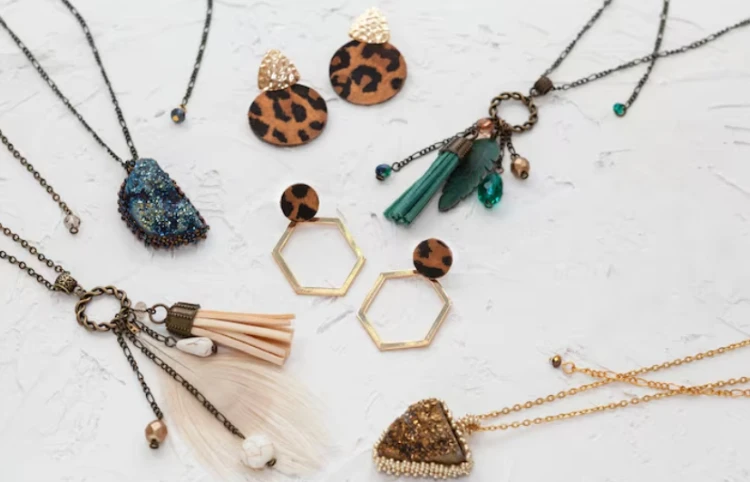
For earrings, check that the card holes and backing hold the pair at the intended height. Long earrings need enough clearance that the decorative elements do not curl or press against the bottom edge. For necklaces, look for a card or insert that controls the chain and pendant so the piece does not tangle during normal handling. For bracelets, check whether the chosen pack preserves the product’s shape and whether sets remain together.
The fit should be tested with the actual finished item, not only with a drawing or approximate dimensions. Even a few millimeters can change how a clasp sits or whether a pendant turns over.
Use a Product-by-Product Protection Check
Before approving the primary packaging, place the sample inside it and inspect the following:
- Does the piece remain in position after the package is picked up, turned, and opened?
- Are delicate beadwork, tassels, chains, or charm elements kept clear of pressure points?
- Is the closure accessible without pulling on the jewelry?
- Does the surface of the pack create a risk of rubbing, snagging, or discoloration for the chosen materials?
- Can store staff repackage the product after a customer tries it on?
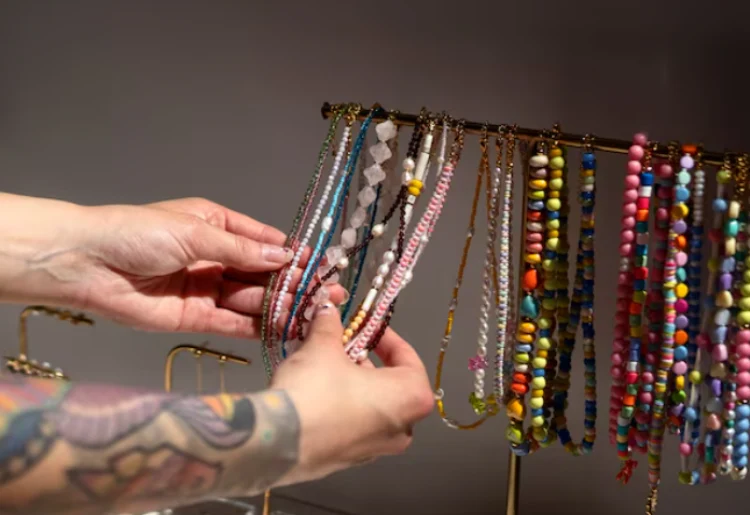
LANCUI’s beading collection shows why a single packaging format rarely suits every handmade style. The product’s construction should lead the decision.
Build the Brand System Around Clear, Repeatable Elements
A packaging system does not need many decorative effects to look considered. A consistent logo treatment, a defined color, a readable product card, and a repeatable material choice often create a stronger result than adding every possible finish.
Start by identifying the elements that cannot change from one order to the next: logo artwork, brand color references, typeface, legal or care information, and the product information needed for retail. Then identify what can change by collection, such as a seasonal sleeve, an insert color, or a small printed story card.
This distinction helps a growing brand keep a recognizable look while still giving new collections their own character. It also makes the production brief easier to review because the supplier knows which elements are fixed and which are open to alternatives.
Provide Artwork That Can Actually Be Produced
Packaging artwork should be supplied in the format requested by the manufacturer, along with color references and placement instructions. A logo on a screen can look very different after foil stamping, printing, embossing, or application to textured paper. Ask for a proof or sample before approving a large run.
The proof should be checked for legibility, line thickness, color shift, alignment, and placement. If the brand name is small, test it at the real viewing distance rather than only on a zoomed-in digital file. A packaging mark has to work in a customer’s hand, on a shelf, and in a product photograph.
Consider the Full Packaging System, Not Only the Gift Box
The customer may see a beautiful jewelry box, but the product also needs to travel in an inner and outer system. A simple structure might include the primary holder, a protective pouch or wrap, an outer box or mailer, and bulk carton protection. The right combination depends on the product’s fragility and the shipping channel.
For a handmade necklace, the inner holder may control the chain, while a pouch or tissue layer reduces surface contact. The outer box then protects the presentation package from compression. For a bracelet set, separators may keep individual pieces from tangling or rubbing during movement.
Ask for the shipping sequence to be explained in the sample review. If the product leaves the factory in one pack and is later moved into a retail pack, the extra handling needs to be part of the quality check. It is better to discover a weak step with a sample than after a product reaches a store with a damaged finish or tangled chain.
Choose Sustainable Options With Specific Questions
Sustainability claims should be tied to the actual material and process, not a general green label. A buyer can ask what the box, pouch, insert, and protective fill are made from; whether materials can be recycled in the intended market; and what trade-offs the chosen format creates for protection and appearance.
There may be a practical balance to make. A lighter pack can reduce material use, but it still has to protect a delicate product. A paper-based option can be appropriate for one presentation, while a reusable pouch may be more useful for another. The goal is to choose intentionally and describe the packaging accurately to customers.
LANCUI‘s service information lists custom packaging and eco-friendly material options. A brief should name any sustainability priorities early so the product and packaging teams can evaluate them together instead of treating them as a last-minute decoration request.
Approve Samples Through a Short, Repeatable Test
Packaging approval is more reliable when the buyer uses the same small test each time. Pack the real product, open it, close it, move it through ordinary handling, check the visible surfaces, and compare it to the approved artwork and product specification. Include a check after the package has been held upright, placed flat, and lightly moved as it would be in normal transit.
Record what was tested and what changed. Useful notes include the product SKU, package revision, material, color reference, logo method, insert dimensions, and observed issues. Photographs of the product before and after the test make later comparisons much easier.
This is also the time to define inspection points for production. For example, the team may check logo placement, clean edges, insert fit, count accuracy, and whether the jewelry is secured in the approved position. Clear inspection points reduce the chance that a correct jewelry piece is shipped in an incorrect or poorly finished pack.
Write a Packaging Brief That Produces a Quote
A good request does not need to predict every manufacturing detail. It should give the supplier enough information to propose the right format, identify missing decisions, and prepare a usable sample.
Include the product type and dimensions, product photos, required protection level, sales channel, brand artwork, preferred colors and materials, any care or retail information, desired sample date, and estimated order quantity. State whether you need only packaging or a coordinated jewelry-and-packaging program.
LANCUI supports handmade jewelry production alongside product presentation and packaging services. Brands can use the services page to outline their needs, then send product references, packaging direction, and sample requirements through the contact page. A single brief for the jewelry and its presentation makes it easier to review fit, protection, and appearance together.
Frequently Asked Questions
What should be included in a custom jewelry packaging brief?
Include product photos and dimensions, how the jewelry will be sold and shipped, protection needs, brand artwork, preferred materials and colors, retail information, estimated quantity, and the sample requirements. The supplier can then identify what needs development before quoting.
Why should packaging be tested with the actual jewelry sample?
The actual piece reveals whether a chain tangles, an earring bends, a bracelet shifts, or an insert puts pressure on a decorative component. A drawing cannot reliably show all of those issues.
Can one packaging format work for several types of jewelry?
Sometimes, but only if the fit and protection are checked for each product. A versatile outer box may work across a range, while the card, insert, or holder inside changes for earrings, necklaces, bracelets, and rings.
When should logo printing be approved?
Approve it after reviewing a physical proof or sample in the actual material and finish. Check placement, readability, color, and line detail at the size customers will see.