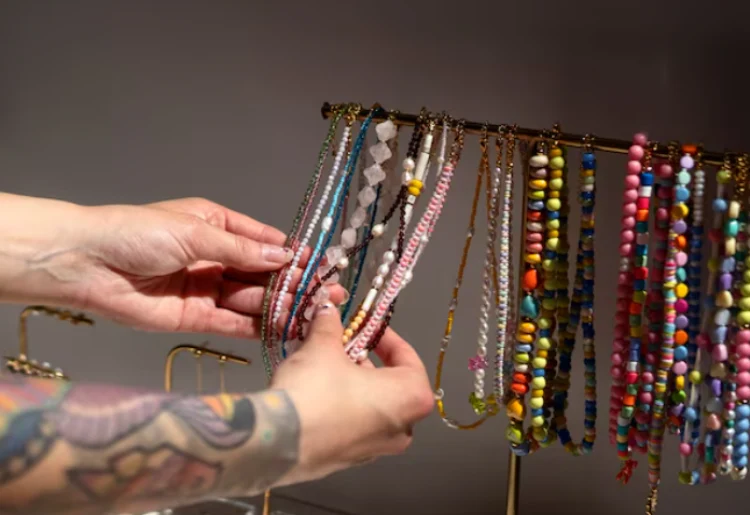
This sample starts with making a shape for the jewelry. The long beaded fringe needs to hang straight. The necklaces need to be packaged with a way to hold the ends of the long chain. The bracelet sets need packaging that keeps all the pieces for the set together. The logo and the ribbon can wait until you have worked out the previous details.
There are many useful jewelry packaging ideas, and most try to give each design in your collection the support it needs while trying to pack and ship it easily enough. For a small collection, one card size for all of the earrings and a separate insert for the necklaces would be better than a separate box for each color.
Below are five options for beaded jewelry packaging which can be used in a variety of situations, from a boutique display rack to an online order sent as a gift. They are to be used as starting points for negotiation with your packaging supplier and must be opened to inspect the finished jewelry.
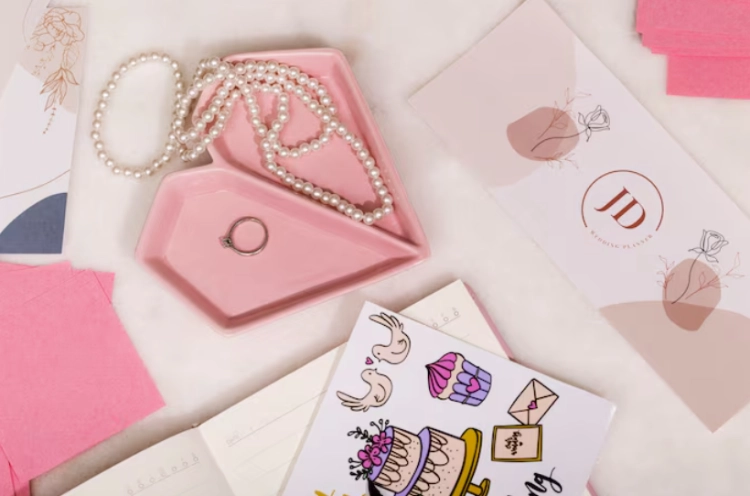
Choose the Pack Around the Product
Before asking for artwork, lay out one sample of every shape in the collection. Include the longest fringe, the widest pendant and any set with several loose pieces. Measure the space they occupy in their proposed packed position.
| Packaging idea | Useful for | Detail to check |
| Long display card with a sleeve | Beaded fringe earrings on retail racks | Hooks and fringe clear the sleeve opening |
| Folded card with chain slots | Necklaces sold flat | Clasp and extension chain stay away from the pendant |
| Pouch with an internal card | Flexible gift presentation | Jewelry cannot gather at the bottom |
| Shallow box with a fitted insert | Gift orders and mixed-piece sets | Lid closes without pressing on beads |
| Set tray with a paper band | Bracelets sold as a defined group | Pieces remain countable and separately positioned |
Decide where on the card the label is to go. If you move this later in the project you may cover up a design detail, have to change the card artwork or require staff to open and identify all the cards of a certain color.
1. A Long Display Card for Fringe Earrings
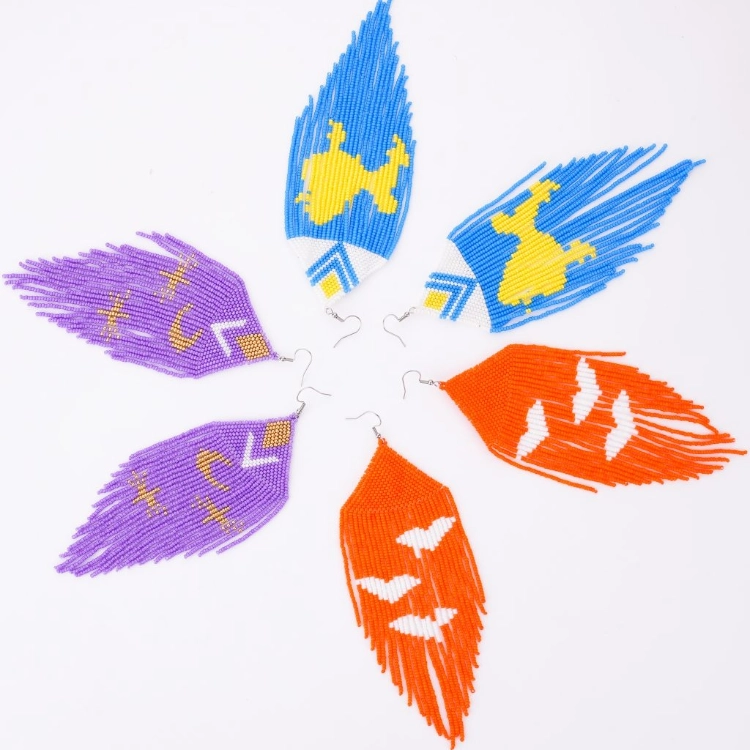
Long beaded fringe earrings illustrate why packaging needs clearance beneath the beadwork.
A tall card lets the customer see the full earring pattern on a rack. It is a practical starting point for designs such as the Spirit of Nature Boho Beaded Fringe Earrings, where folding the loose fringe just to fit a short pack would spoil the presentation.
Mounting holes for the two sets of mounting points should be spaced far enough apart so that they don’t overlap. Make sure there is enough space below the longest cables, within any protective sleeve, and check the top of any hooks as they can catch in the opening of a sleeve when trying to pull a card out.
Remove the earrings from the card with your hands alone. What may look neat in a photo can require you to bend a hook to remove it. Modify the hole or slot as necessary.
Card products generally take up very little storage space, are easily flexed but offer little resistance to permanent bending. For mail order products, it is advisable to specify an outer pack to support the card. A sleeve alone is not a suitable means of transit protection.
2. A Folded Card That Controls a Necklace Chain
A folded card design can show off the pendant from the front of the card while hiding the clasp and any spare chain from view. This is particularly effective for long necklaces that can form a loose coil at the bottom of a bag.
Use the Brass chain with heart charm necklace as a reference to illustrate how slots and pendant position can be used. Make sure the pack can hold the chain without it pulling taut at the edges of the folds, and make sure to leave room for the small bead details to be visible and clear of the folds.
A photo of the hidden side of the bracelet could also be included in the packing instructions. This would show how the extension chain is packed and where the clasp is placed. As it stand, two people packing from the same card could produce very different results.
Folded cards are most useful when you are making a number of Necklaces that use a similar design. However, a folded card is less use when a pendant is considerably thicker or a chain needs to follow a different route. It is worth making the largest Necklace first before deciding on a standard card for the rest of the designs.
3. A Pouch With a Supporting Card
Fabric pouches can be used as gifts to customers. These can be supplied in a plain pouch and a collectible card with the identity of the collection on it. The same packaging can be used for different seasonal ranges.
In addition to individual items needing control, loose jewelry also needs to be contained within itself. This means that earrings should be stored on cards and necklaces on suitable holders. Soft pouches allow loose jewelry to fall to the bottom of the bag and become jumbled together in one corner. Look for drawstrings, rough seams and loose fibers when storing open hooks or exposed beadwork.
Ask for a sample to be supplied in the actual fabric and color. Rub and handle the pouches that have been filled with items such as jewelry and then test for marks on the jewelry and cards. Note that such tests only provide evidence of short-term storage and not long-term.
Pouches are suitable for counter sales and gift packaging. The packaging does not offer any crushing resistance, therefore a second outer packaging must be chosen for online orders.
4. A Shallow Box With a Fitted Insert
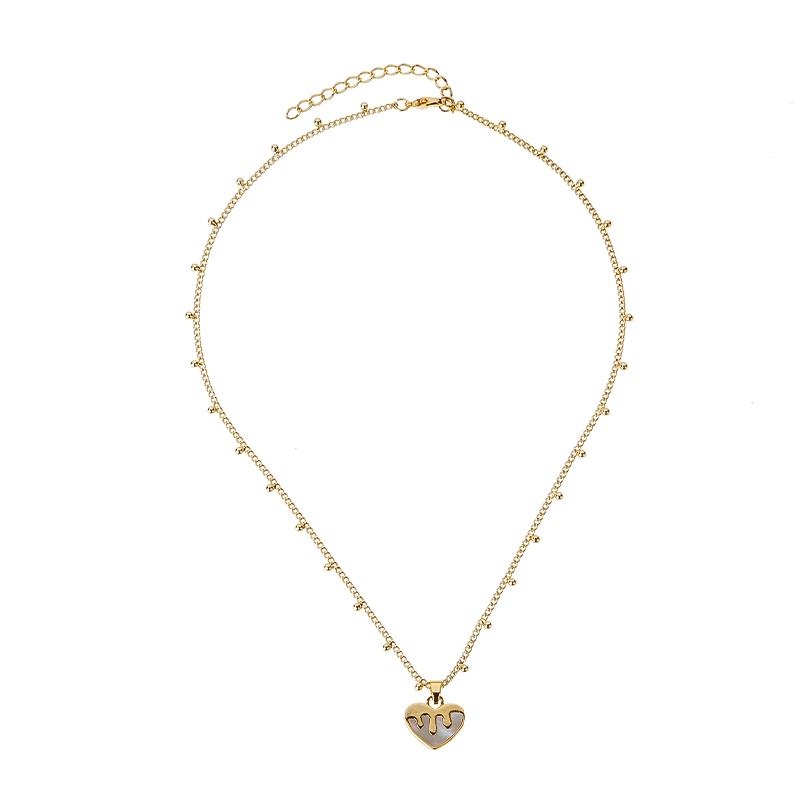
Heart charm necklace with small bead details, a pendant, and an extension chain to position separately in the pack.
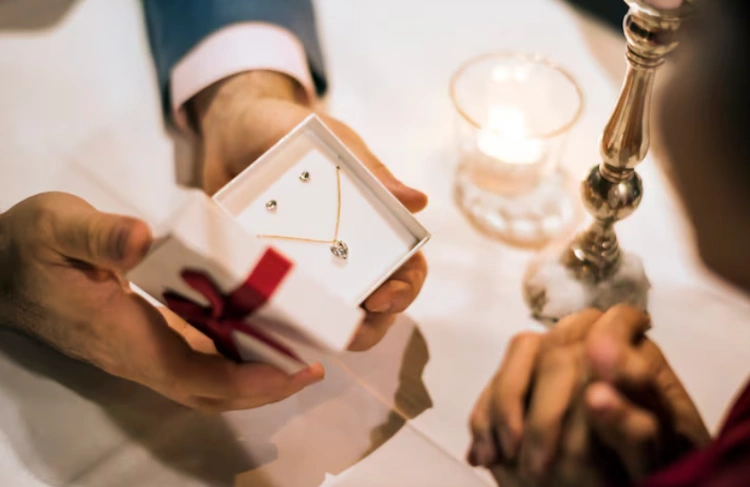
The shallow box is ideal when you have a product that would benefit from being presented in a fixed way or when you have several items and you want to present each of them in separate positions within the box. An insert can hold a necklace above a bracelet or even keep an earring pair separate from each other without the need for additional small bags.
Match your insert to the completed product including hardware. Slowly close the lid of the box and check for contact with raised beads, hooks or the clasp of the closure. Even a long box can be too shallow.
Can the insert be removed from the packaging? If the customer has to pull on the jewelry to lift the insert then consider adding a finger opening to the packaging or revising the packaging to better fit the item. Loose decorative filling is not a substitute for a holder that is appropriate for the jewelry.
When comparing prices for blank print boxes to flat print cards, remember that printed boxes take up more space in warehouses as well as in cartons shipping product. Compare “apples to apples” based on the printed and assembled box dimensions and how many of each you will need to ship in a carton. The cheapest empty box may not be the cheapest printed package in the end.
5. A Set Tray With a Removable Paper Band
For items that are sold in sets such as bracelets, consider packaging in a shallow tray or even a custom cardboard shape that allows you to view the entire set while keeping all pieces organized. Use a paper band to identify the set name and to hold the UPC barcode.
For packaging of contents write clearly “one set of four bracelets” instead of “four pieces”. So for an order of 60 sets of four bracelets each this will be received as 60 retail packs containing in total 240 bracelets. Use same units on invoice and packing list.
Place each bracelet in its own individual position around the display as needed by the design of the bracelet. Do not pull an elastic bracelet too tight to try to keep it on a band of display. Also check that any pendants or other hard items are not lying against adjacent beadwork.
The above format is for a fixed quantity of sets. Should staff be regularly selling individual bracelets then it would be more sensible to pack the items in separate labeled boxes instead of opening up a whole tray and then throwing away the packaging.
Keep Branding and Packing Instructions Simple
Remember that small businesses change often. Stock cards with short print runs of branded sleeves could be more suitable for a small trial collection than a fully custom made box for every design. Make sure to ask for both options and for packing labor as well as for any artwork or tooling charges.
LANCUI offers handmade jewelry and packaging support. Its custom packaging design and production services give buyers a place to discuss the product and pack together. Send the selected product references, intended sales channel and required pack quantities when requesting a proposal. Confirm what the quotation includes.
For each SKU, keep one approved packing record with:
- Product reference and exact color name or code.
- Contents of one retail pack and barcode placement.
- Card, insert and closed-pack dimensions.
- Photos of the front, back and arrangement inside.
- Retail packs per inner box and inner boxes per master carton.
Use the same identifiers on the order and labels. A color nickname that differs between documents can become a receiving problem even when the jewelry itself is correct.
Check Materials Before Printing Recycling Claims
Brown paper alone does not establish that a finished package belongs in a recycling bin. Coatings and mixed components matter, as do collection rules where the customer lives.
The U.S. EPA’s guidance on common recyclables advises checking local programs. It also notes that paper gift wrap often is not recyclable when it has a shiny or laminated coating. That statement concerns gift wrap; it does not classify every coated jewelry box.
Ask the packaging supplier for the material specification before printing disposal instructions. If components separate, describe them separately. Avoid calling a whole pack recyclable based only on its paper exterior.
Questions Buyers Ask Before Approving a Pack
How do you package jewelry for shipping after choosing the retail pack?
Place the filled retail packs in a suitable outer carton with enough support to limit movement. Check the arrangement using the intended packing quantity. A single attractive box says little about a full carton. Agree on shipment testing appropriate to the route and carrier; a quick handling check cannot establish transport performance.
Can one packaging size cover a whole beaded collection?
Sometimes. Try the longest, widest and thickest items before committing. Shared sizes can simplify purchasing, but a pack that leaves small items loose or bends longer fringe needs a different insert or size. Keep a physical approved sample so later batches can be compared with the same reference.
Before approving bulk packaging, unpack that sample completely and repack it using the written instructions. Check the label against the order. If those ordinary tasks expose a snag, a missing piece or an unclear step, fix the pack while it is still a sample.