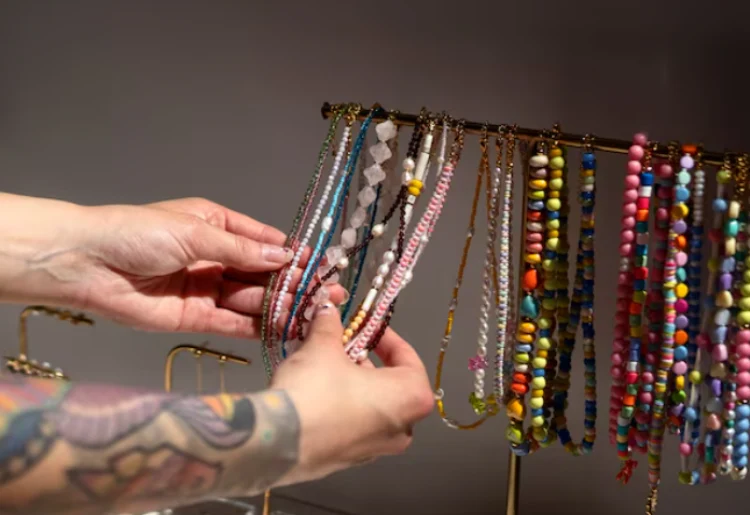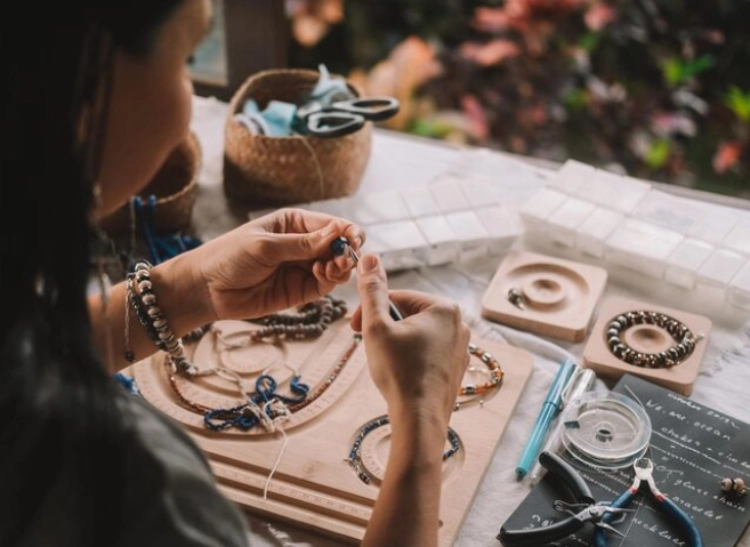
Wholesale jewelry storage should prevent pieces from rubbing, catching or being crushed while keeping each design easy to identify. For LANCUI‘s hand-woven boho jewelry, separate beadwork from hooks, chains and neighboring pieces, preserve matched pairs, and use packaging that supports the design without pressing on it. The same unit should remain traceable from receiving inspection to dispatch.
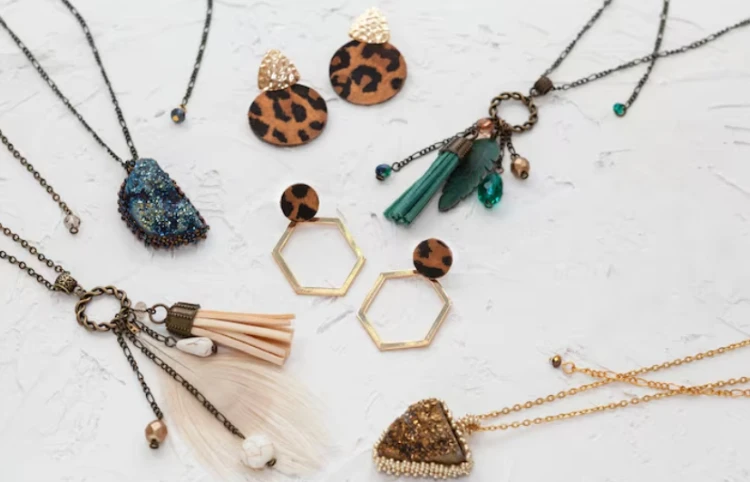
Inspect and Identify Stock Before Storage
Check jewelry on a clean, smooth surface before placing it in a tray or pouch. Record damaged pieces separately so they cannot return to sellable stock merely because they have been repacked.
Keep Jewelry and Packaging Clean and Dry
Handle stock with clean, dry hands and keep cosmetics, sprays and food away from the packing area. For superficial dust, use the supplier-approved care method. Do not soak woven jewelry or apply solvents without confirming compatibility with the thread, bead finish and metal components.
If a shipment arrives damp, isolate it and inspect both the jewelry and its packaging before storage. Do not seal moisture inside a pouch or carton. Follow the supplier’s instructions for drying or disposition rather than applying heat to speed the process.
Check Beadwork, Edges and Connections
Inspect the front and reverse for cracked or missing beads, loose thread, distorted outlines and exposed sharp edges. Check hooks, jump rings and clasps for deformation or open connections. Set aside damaged items instead of hiding the defect behind a display card.
For earrings, compare the pair’s design, colors, dimensions and orientation against the approved reference. Check that both fastening components are present. A correct piece packed with a different colorway is still an incorrect retail pair.
Close Clasps Without Tensioning the Weave
Close necklace and bracelet clasps where appropriate so loose ends are less likely to catch. Place chains and woven sections in separate channels or under separate smooth restraints. Keep the beadwork in its natural shape rather than stretching it across a display card.
Support a long piece at more than one point when moving it. Avoid lifting an entire tray by one necklace or letting a clasp drag across neighboring pieces. Do not attach stock labels directly to woven thread.
Choose Storage for Different Jewelry Types
Choose the compartment or insert around the finished jewelry dimensions, including hooks and closures. Check the fit with the lid closed. Extra padding is not helpful if it compresses the woven area.
Earrings and Structured Beaded Pieces
Store the Boho Bloom Handcrafted Beaded Floral Earrings Collection so that earrings do not press against one another. A divided tray or individual compartment lets each piece rest without hooks catching on neighboring beadwork. Before closing a box, check that the lid does not compress the design. Keep pairs together for easy selection, but separate their surfaces when packing them for transport.
Hand-Woven Rings and Small Accessories
Give the Miyuki Antique Bead Lightweight High-End Handwoven Stainless Steel Bohemian Ring its own smooth compartment. Avoid pushing woven details into a tight ring slot or placing heavier accessories on top. The aim is to support the piece without squeezing its beadwork. For retail stock, label the compartment so staff can find the design without repeatedly handling adjacent items.
Necklaces That Need Extra Space
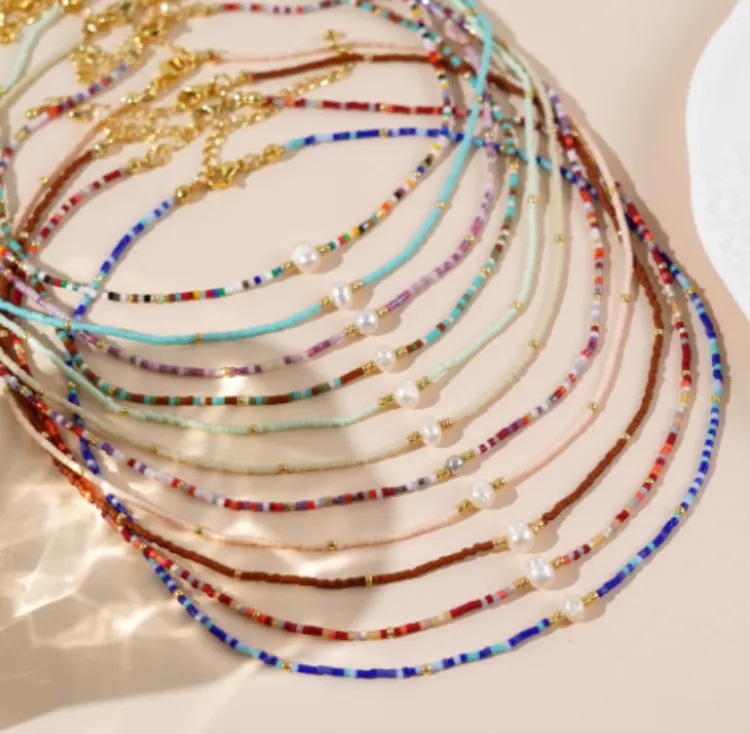
Lay the Bohemian Style Rainbow Miyuki Bead Handmade Necklace in a loose shape with its chain and woven elements separated. Close the clasp before putting it away, then check that it cannot catch on neighboring jewelry. Avoid folding a woven area sharply to fit a small box. A larger compartment is preferable to putting constant pressure on the same point.
Prevent Common Storage Damage
Prevent damage at the point of contact: hooks against thread, metal against bead coatings, or a box lid against raised details. A smooth barrier and a stable insert should keep these surfaces apart without stretching the jewelry.
Avoiding Tangles and Thread Stress
Use separate compartments or smooth individual pouches within a divided tray. Keep earring hooks and necklace clasps away from exposed thread paths. Avoid rough foam, loose fibers and adhesive surfaces that can snag the weave.
If a piece catches, stop and release the contact point carefully rather than pulling it free. Inspect the thread and bead alignment afterward. Record recurring snag locations and change the insert or restraint that caused them.
Protecting Beads From Friction and Pressure
Separate beadwork from loose metal accessories that can rub across its surface during storage or travel. If the bead material is uncertain, distinguishing glass seed beads from plastic beads helps clarify what requires further confirmation. Do not scratch or heat a finished piece to identify it. Ask for material details before choosing cleaning products, and use a smooth divider to limit contact between pieces.
Managing Heat, Humidity and Direct Sunlight
Store packed stock away from direct sunlight, heaters and damp walls. Follow the material and finish-specific care instructions; one fixed temperature or humidity rule cannot be assumed for every bead, thread and metal combination.
Check storage conditions when seasons or warehouse locations change. If moisture control is needed, select an appropriate packaging solution and keep any desiccant separate from direct contact with jewelry. Do not assume that a sealed bag resolves a damp-stock problem.
Keep Wholesale Inventory Ready for Dispatch
Organize stock so staff can pick the correct design without repeatedly opening or handling adjacent pieces. Separate accepted stock, returns and items awaiting inspection, with the status visible on the tray or outer pack.
SKU Labels and Matched-Pair Control
Label the outer pouch, card or compartment with the SKU, design, colorway, size where applicable, quantity and batch or receiving reference. Use one location per variant. For earrings, state whether the inventory quantity is counted in pieces or pairs.
Check a picked pair against the SKU label before sealing its pack. Mirror-image designs should match the approved left-right arrangement; symmetrical designs should not be forced into a mirror pattern. Photograph the approved pairing where visual identification is difficult.
Anti-Abrasion Packing and Carton Protection
Protect each piece with a smooth, nonabrasive layer, then use an insert or divided inner box that limits movement. Keep heavy metal parts off the beadwork. Do not tighten bands across a woven motif or let loose hooks pierce the wrapping.
Choose an outer carton and internal support suited to the shipment weight and stacking conditions. Check a representative packed carton for movement and compression through an agreed transport test or trial shipment. Inspect the jewelry afterward for bent hooks, flattened motifs, rubbed finishes and displaced pairs.
Dispatch Inspection Checklist
Before sealing each retail unit, check: correct SKU and colorway; correct piece or pair count; matching earring orientation; intact beads and thread; closed connections; separated metal and beadwork; and enough clearance below the lid. Quarantine any unit that fails.
Before closing the shipping carton, reconcile unit counts with the packing list, confirm batch labels and carton identification, and check that dividers cannot collapse or migrate. Record the inspection and retain the packing configuration so repeat shipments use the same protection.
Conclusion
Wholesale packing should preserve both the jewelry and its identity. Keep pieces separated, support the woven shape, label every variant and verify pairs before sealing. Confirm that the final carton protects against movement and compression, not just that the individual pouch looks neat.
Contact LANCUI
Use LANCUI’s contact page to discuss the jewelry designs, unit-pack dimensions, SKU labels and shipping configuration. Include photographs of the proposed tray or insert and the expected carton quantities so packing requirements can be reviewed alongside the pieces.
FAQ
Can Earrings Be Packed Together as One Pair?
Yes, if each earring is restrained and their surfaces cannot rub or catch. Keep the pair under one SKU label, but use separate positions or a smooth barrier between the pieces. Check that hooks do not contact the woven sections.
Is a Soft Pouch Enough for Wholesale Shipping?
Not by itself when the contents can be crushed or move against heavier items. A pouch can reduce abrasion, but a suitable insert, inner box and outer carton provide the shape and compression protection needed for transport.
Test the complete packing arrangement with representative jewelry. Inspect the pieces after the trial, including hidden connections and the reverse of the beadwork, rather than judging only the outside of the carton.
What Should a Wholesale Jewelry Label Include?
Include the SKU, design, colorway, relevant size, quantity and batch or receiving reference. Mark earring quantities clearly as pieces or pairs, and keep the label on packaging rather than on the woven thread.
The label should remain readable during picking and dispatch. Reconcile the inner-unit identifiers with the carton packing list so a mismatch can be traced without opening every retail pack.