Evaluating plastic vs glass beads during seasonal sourcing helps retail buyers protect catalog markup and prevent costly return rates. In wholesale jewelry procurement, raw component choices determine how finished accessories hold up against sweat, friction, and UV exposure. To assist retail brands and boutique buyers in building reliable assortments, LANCUI operates as a specialized B2B manufacturing partner. Operating for over ten years, LANCUI combines traditional handweaving techniques with scalable factory capacity. Supported by a BSCI-certified facility, the company manages material selection, sample prototyping, and bulk production for international jewelry brands, independent designers, and retail distributors.
Why Is Evaluating Plastic vs Glass Beads Critical for Retail Margins?
Assessing component materials early in the purchasing cycle prevents unexpected inventory write-downs caused by quality failures.
Preventing Surface Fading and Abrasion in Seasonal Collections
Plastic and acrylic seed beads have thin surface coatings which rapidly yellow, peel or dull in the UV light, humidity and sweat from the human body. This means that cheap synthetic beadwork is rapidly degraded in the wearing by customers during the warm months of the year. The metallic and pastel colors of the beadwork are quickly stripped of their glazes to leave customers complaining and returning the items. Fused glass seed beads on the other hand have the color in the physical structure of the bead or a heat-fused protective glaze. Therefore it is possible to check the material composition before going into production and then check that the produced inventory has the same permanent color.
Protecting Thread Integrity by Avoiding Rough Plastic Mold Flashing
Manufacturing processes differ significantly between synthetic resins and glass. Injection-molded plastic seed beads frequently leave sharp mold flashing and rough ridges inside the drill holes. As a bracelet or necklace moves against the body, these internal plastic ridges act like tiny blades, severing woven nylon or metal thread over time. Glass seed beads undergo heat polishing, creating smooth inner channels that reduce friction against handwoven thread strands.
Aligning Raw Material Verification with Commercial Sourcing Strategies
Procurement managers must establish physical inspection protocols during sample sign-off rather than relying solely on vendor descriptions. Verifying material composition before issuing a Purchase Order (PO) safeguards retail markups and avoids clearance markdowns. To review foundational physical testing techniques used across the industry, examine How Can You Tell If Seed Beads Are Glass or Plastic? for detailed inspection steps.
How Do Professional Buyers Test Plastic vs Glass Beads in the Factory?
Conducting rapid, reliable physical checks on plastic vs glass beads allows quality control teams to verify bead composition without complex laboratory equipment.
Executing Thermal Conductivity and Touch Temperature Tests
Glass possesses higher thermal conductivity than synthetic plastic polymers. When handling raw bead samples, genuine glass seed beads feel instantly cool to the touch and absorb ambient room temperature slowly. Plastic beads match room temperature immediately and feel warm or neutral against the palm. Quality inspectors use touch-temperature verification as an immediate first-pass filter during factory audits.
Conducting Acoustic Resonance and Density Weight Inspections
We use physical density and acoustic resonance to verify materials. The fused glass seed beads have a specific gravity of about 2.4–2.6 g/cm³ whereas the acrylic or plastic alternatives have a specific gravity of about 1.1–1.2 g/cm³. Therefore on retail display cards, they will have a noticeable weight drop. In a shallow stainless steel tray, we can then shake the glass beads and they will produce a sharp, high-pitched ringing frequency. The plastic beads on the other hand will produce a dull thud, below about 500 Hz.
Performing Surface Scratch and Thermal Resistance Evaluations
Destructive sample testing confirms material threshold limits. Glass seed beads possess a Mohs hardness of 5.5 to 6.0 and withstand thermal exposure exceeding 600°C without deformation. Pressing an inspection pin heated to 150°C–200°C against synthetic plastic beads causes immediate surface softening, gouging, and pungent chemical fumes, while glass beads remain completely unaffected.
Which Glass Seed Bead Designs Drive Higher Catalog Conversions?
Selecting finished designs that highlight the reflective brilliance and geometric precision of glass beads builds a high-performing product lineup.
Anchoring Necklines with the Bohemian Style Rainbow Miyuki Bead Handmade Necklace
Serving as a visual anchor for seasonal displays, the Bohemian Style Rainbow Miyuki Bead Handmade Necklace incorporates uniform Japanese Miyuki DB glass beads and organic glass pendants. Miyuki DB beads feature a precise tubular geometry, allowing the handwoven band to lie completely flat against the collarbone without twisting. Featuring vibrant rainbow color combinations and an adjustable twisted link chain extending from 41 to 50 cm, this bohemian style necklace draws immediate customer focus on digital storefront banners.
Capturing Dynamic Earwear Demand with Spirit of Nature Boho Beaded Fringe Earrings
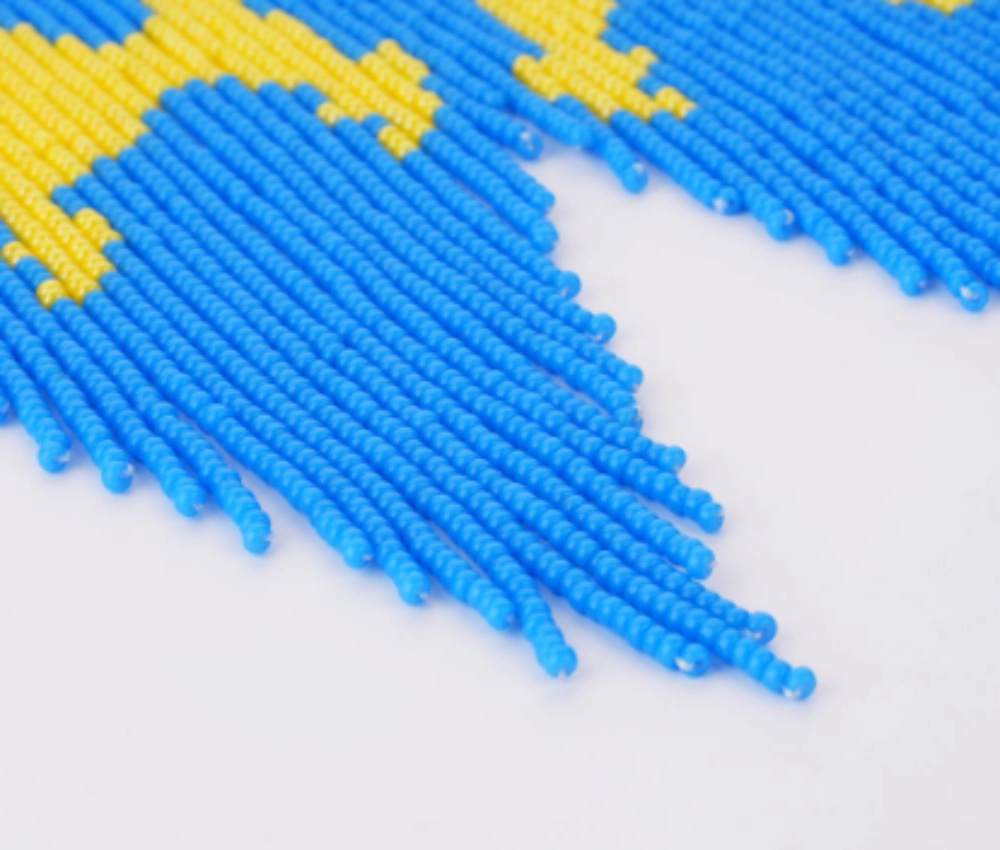
Dynamic movement drives earwear sales across resort and festival collections. The Spirit of Nature Boho Beaded Fringe Earrings incorporate flowing glass seed bead fringes inspired by nature and celestial motifs under the Spirit of Nature line. Handwoven in bold orange, purple, and blue hues, these beaded fringe earrings sway naturally without static cling or thread fraying, as smooth glass drill holes allow individual fringe strands to drop cleanly.
Driving Impulse Add-On Sales with the Bohemian Colorful Semi-Precious Stone Beaded Lucky Charm Bracelet
Complementing statement neckwear with stackable wristwear encourages checkout cross-selling. The Bohemian Colorful Semi-Precious Stone Beaded Lucky Charm Bracelet pairs natural semi-precious stone accents with high-quality glass seed beads. This combination creates rich tactile contrast and offers an adjustable fit across wrist sizes, functioning as a high-margin impulse item for an artisanal jewelry catalog.
What Quality Standards Protect Your Catalog from Chemical and Physical Risks?
Verifying factory compliance and structural weaving protocols ensures bulk shipments match pre-production sample standards.
Securing REACH and RoHS Compliance for Lead-Free Safety
Skin irritation and heavy metal contamination pose serious compliance risks for importers in handcrafted jewelry wholesale markets. Professional procurement managers must confirm that raw glass glazes, metallic coatings, and metal findings comply strictly with REACH and RoHS regulations. Ensuring components are lead-free, nickel-free, and cadmium-free protects wearers with sensitive skin and prevents regulatory customs holds.
Bypassing the Glue Trap with Mechanical Cold-Connections and Multi-Phase QC
Budget manufacturers have long used cheap chemical glues to attach seed beads to findings, rather than doing real wire-wrapping or handweaving. These chemical glues degrade quickly under the friction of transit, as well as from body heat, and the beads fall off. We use mechanical cold-connections, such as micro-knotting and lock-stitch weaving, in our quality manufacturing. We verify the structural durability of our jewelry through a three-phase quality control system, including raw material inspection, real-time thread tension monitoring during assembly, and pull-tests on clasps and jump rings before packaging.
How Can You Source Certified Glass Seed Bead Jewelry with LANCUI?
Partnering with an experienced custom jewelry manufacturer simplifies bulk procurement and ensures consistent production quality.
Scaling Custom Orders with Over a Decade of Artisanal Manufacturing
Expanding seasonal order volumes while preserving delicate handweaving requires organized factory management. Operating for over ten years, LANCUI’s BSCI-certified facilities satisfy international social compliance standards. Skilled artisans work under monitored conditions, enabling brand managers to scale production seamlessly for peak sales seasons without sacrificing handwoven precision or material accuracy when differentiating plastic vs glass beads.
Mitigating Inventory Risk via Ready Stock Services and Rapid Prototyping
Fast-moving retail cycles require flexible inventory paths. Utilizing custom ODM development allows buyers to convert sketch concepts into physical samples within days. Furthermore, retail buyers seeking to test new glass bead designs with low inventory risk can utilize a Ready Stock Service featuring immediate dispatch and flexible order quantities to adjust to real-time market demand.
Initiating Direct Sourcing Collaboration with Our Factory Team
Direct communication between retail buyers and factory technicians resolves technical details early. Working closely with production managers allows you to refine material specifications, adjust sizing, and optimize order quantities for target price points. Evaluating plastic vs glass beads requires experienced manufacturing support. If you need assistance with custom prototyping, material testing documentation, or bulk quotes, reach out through our contact portal. Our design and production specialists are ready to discuss your project specifications and guide your procurement process.
FAQ
How do plastic vs glass beads compare in long-term wear resistance?
Glass seed beads feature fused colorfast surfaces that resist fading, scratching, and chemical corrosion caused by sweat or perfumes. Plastic beads degrade rapidly under UV light and friction, losing their surface shine and exposing raw base resins.
What compliance certifications should importers check when ordering glass bead jewelry?
Importers should verify that all raw metal findings, clasps, and glass coatings comply with REACH and RoHS standards for lead-free, nickel-free, and cadmium-free safety. Sourcing from a BSCI-certified factory further guarantees ethical labor compliance across production.
Can boutique buyers test glass seed bead collections with flexible order quantities?
Yes, buyers can leverage a Ready Stock Service to order smaller quantities of pre-manufactured designs featuring glass seed beads for immediate dispatch. This allows boutique owners to test market response before committing to larger OEM or ODM custom manufacturing runs.