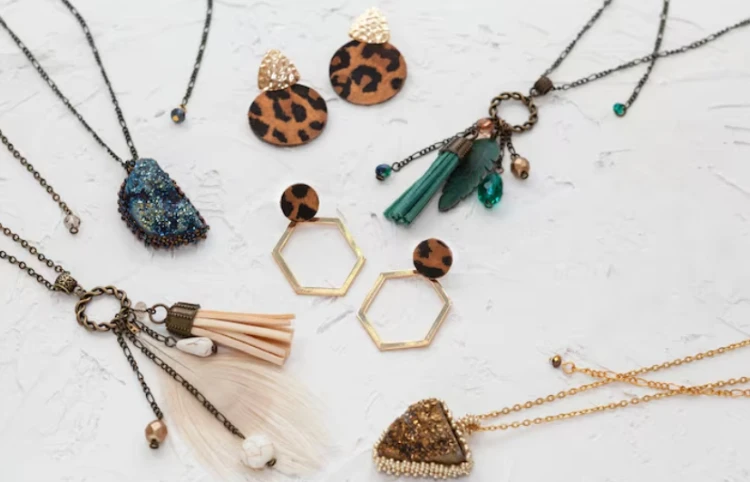
Skin-Friendly Jewelry matters when fashion accessory brands sell to Japanese and Korean consumers who care about comfort, daily wear, and sensitive-skin risk. Nickel-free jewelry and hypoallergenic jewelry are useful claims, but buyers still need to check the full material structure, not only the visible design. A bracelet may include beads, stones, thread, charms, and metal connectors. A necklace may combine brass, zircon, chain links, plating, and clasp parts. A ring has even more direct skin contact.
LANCUI works with many international jewelry brands, designers and retailers, helping them create handmade accessories as well as producing OEM, ODM products and sourcing raw materials. They can also create samples for clients and perform quality control checks on mass produced items as well as packing them. For sellers of Skin-Friendly Jewelry, it is particularly helpful as it allows to avoid many risks connected with mass production and allows to fulfill expectations of Japanese and Korean buyers.
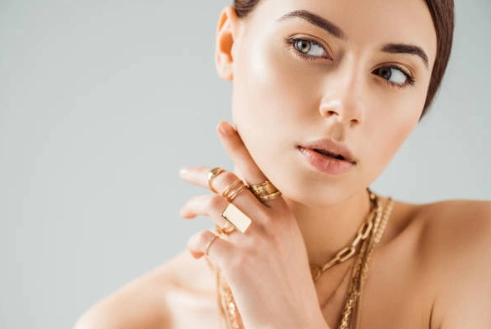
What Does Skin-Friendly Jewelry Mean for Fashion Accessory Brands?
When we say skin-friendly we don’t mean everyone will like it. It means the manufacturer has made thoughtful choices about the material, the finish, the weight, the fit and the parts that are in contact with the skin. It should be treated as a development criterion rather than just a marketing slogan.
Safe Wear Starts with Skin Contact
To make a jewelry item more comfortable to wear, first identify the places where your jewelry will be in contact with your skin most. This would include rings, earrings, necklace chains, the part that opens and closes the necklace, the hook that goes through the loop of the necklace, connections of bracelets, and other parts that are used to make a bracelet adjustable. Beadwork can be somewhat uncomfortable to wear if the edges of the individual beads are not smooth, or if the individual elements of the design do not hang from each other sturdily. And of course, the item should be lightweight and feel good to wear. Items such as beads and pendants that are used only to add decoration to a piece of jewelry need not be examined as closely as the previously mentioned items.
Nickel-Free Claims Need Material Control
To ensure the jewellery is Nickel-free part by part must be checked. A necklace could consist of different parts e.g. pendant made of one material, chain made of another material and the clasp made of a third material. A small change to one of the metal parts during production can make the initial claim of the jewelry being Nickel-free unreliable. It is recommended that buyers ask for confirmation of the materials used before sampling the jewelry.
Hypoallergenic Positioning Must Match Real Use
To be most comfortable, hypoallergenic jewelry for sensitive skin should match the scene in which it will be worn. For example, a tight ring, a daily-worn necklace and a loose, beaded cuff have different potential for irritation. Consider factors such as wear time, sweat, friction and sharp edges when evaluating comfort.
Which Materials Should Buyers Choose for Skin-Friendly Jewelry Collections?
Materials should generally be chosen based on the type of product, level of contact, target price and design style. We work with a variety of materials, including semi-precious stones, glass beads, Miyuki beads, stainless steel, alloy, cotton threads, brass and zircon. It is up to the buyer to decide which materials will be used for decoration and which will be in contact with the skin.
Semi-Precious Stones and Glass Beads for Lower Metal Contact
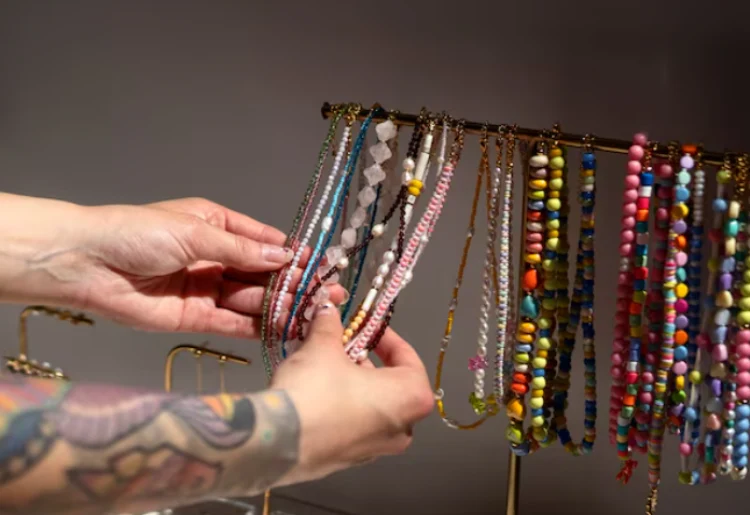
Semi-precious stones and glass beads are also great for colorful bracelets and beaded necklaces to add to a bohemian collection. The Bohemian Colorful Semi-Precious Stone Beaded Lucky Charm Bracelet is perfect for gift, resort and lifestyle lines as the visual value of this bracelet is mainly from the beads and stones as opposed to the metal
For sensitive-skin planning, buyers should still review the charm, thread, knots, and adjustable parts. These smaller details decide whether the product feels consistent in daily wear.
Controlled Metal Choices for Rings and Necklaces
Rings and necklaces need stricter review because they often sit directly on the skin. For the Fashion Heart Pendant Ring, buyers should check the ring base, edge smoothness, pendant joint, and surface finish before bulk approval.
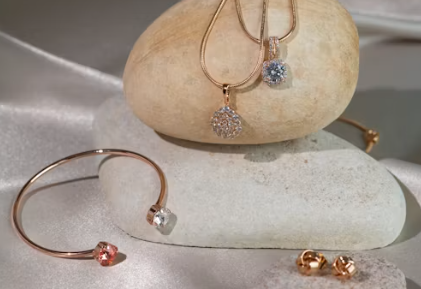
For necklaces, chain feel, clasp operation, pendant balance, and plating consistency should be reviewed during sampling. The Brass zircon chain heart necklace suits feminine everyday collections, but its chain and clasp should be checked carefully for comfort and market claims.
Adjustable and Lightweight Designs for Daily Wear
Adjustable structures help reduce fit problems across different wrist and neck sizes. Lightweight construction can reduce pulling, friction, and discomfort. For Skin-Friendly Jewelry, a beautiful design is not enough. The product should feel stable, smooth, and easy to wear.
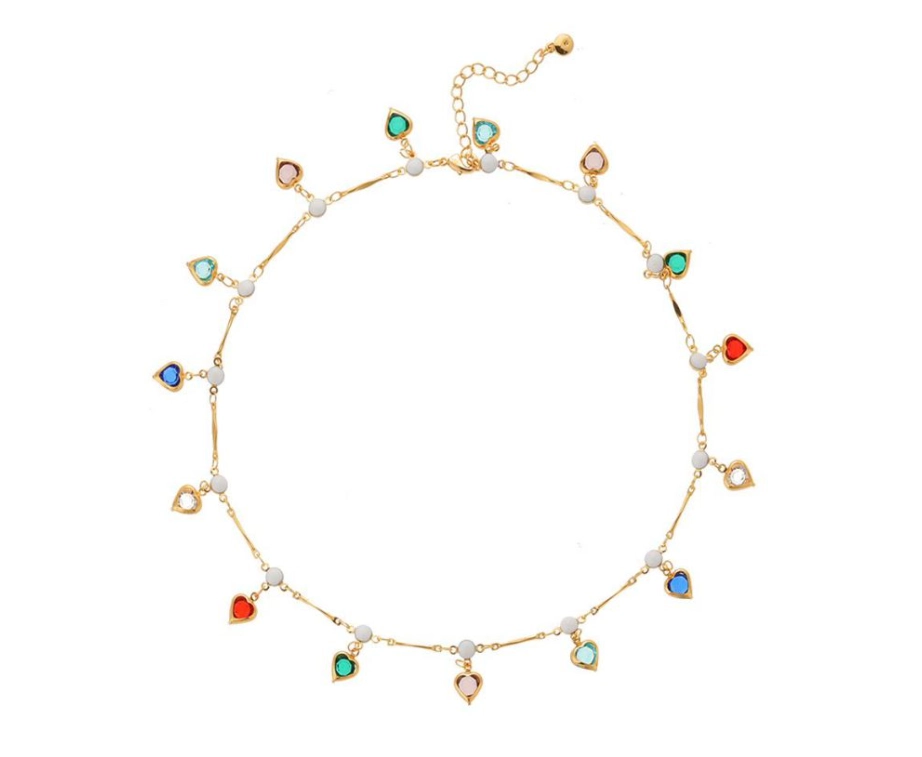
How Can Brands Test Nickel-Free and Hypoallergenic Jewelry before Bulk Orders?
Testing should begin before sample approval. If buyers wait until bulk production to ask for nickel-free or hypoallergenic support, the supplier may need to change materials, rebuild samples, or adjust packaging notes. Early checks save time and reduce repeated revisions.
Raw Material Verification before Sampling
Buyers should prepare a material map that lists beads, stones, threads, chains, rings, charms, clasps, jump rings, hooks, and coatings. Each part should be marked as direct skin contact or decorative. This helps the supplier confirm which parts need stricter review.
Production Monitoring during Handmade Assembly
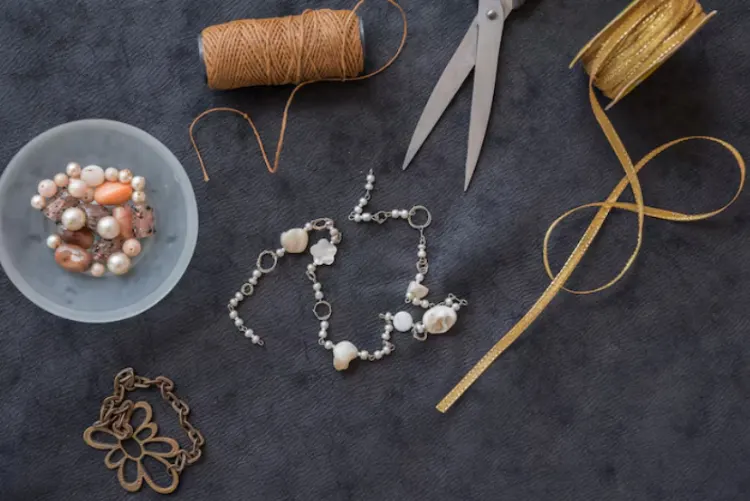
Handmade jewelry depends on process control. Even good materials can cause problems if assembly leaves rough edges, loose joints, uneven tension, or unstable knots. LANCUI’s production monitoring helps check these details during making, not only after finishing.
Final Inspection and Compliance Records before Shipment
Final inspection should cover appearance, size, function, surface condition, connection strength, and packaging condition. For sensitive-skin jewelry materials, buyers may also need compliance support such as REACH or RoHS depending on sales channel requirements.
Which LANCUI Products Fit Skin-Friendly Jewelry Lines for Japan and Korea?
Product selection should match the target customer, wearing scene, and material-control plan. For Japanese and Korean collections, buyers often need items that feel light, look refined, and can be described honestly in product copy.
Bohemian Colorful Semi-Precious Stone Beaded Lucky Charm Bracelet for Gift and Lifestyle Lines
This bracelet suits casual, resort, gift, and lifestyle collections. Its semi-precious stone and beaded structure helps reduce reliance on large metal surfaces while keeping strong color expression. Buyers should focus on the charm, thread, and adjustable section during sampling.
Fashion Heart Pendant Ring for Trend Testing and Small-Batch Launches
This ring can work for trend testing because it has a clear fashion detail and giftable heart motif. Since rings touch the skin directly, buyers should review surface finish, edge comfort, pendant movement, and material claim before large orders.
Brass Zircon Chain Heart Necklace for Feminine Everyday Collections
This necklace fits feminine daily styling and small gift lines. The heart design gives it a clear retail story, while the chain and clasp need careful review. For Skin-Friendly Jewelry collections, buyers should confirm coating, clasp comfort, and surface feel before shipment.
How Can LANCUI Support Safer Material Selection from Design to Shipment?
A skin-friendly collection depends on supplier cooperation. Design, sourcing, sampling, assembly, inspection, and packaging all affect the final result. LANCUI’s OEM and ODM services can support brands that need both creative development and production control.
OEM and ODM Planning for Market-Specific Standards
For OEM projects, buyers can provide existing designs and request material control based on Japanese and Korean market needs. For ODM projects, LANCUI can support trend review, material selection, prototyping, and production planning.
Sample Review, Feedback and Material Adjustment
Sample review should include wearing feel, edge condition, clasp function, bead tension, pendant balance, and packaging fit. Feedback should be added before mass production, not after shipment.
Service and Contact for Custom Skin-Friendly Jewelry Projects
LANCUI also supports product photography, illustration, sample development, and custom packaging. This helps brands keep product presentation, material choice, and market positioning aligned.
If your team is preparing a nickel-free or hypoallergenic jewelry line for Japan or Korea, prepare the product type, skin-contact parts, target claim, and required documents first. Clear material notes make sampling easier and reduce avoidable revisions. You can share your project details through the LANCUI contact page.
FAQ
Q: What Is the Difference between Nickel-Free Jewelry and Skin-Friendly Jewelry?
A: Nickel-free jewelry is mostly focused on controlling nickel in jewelry while Skin-Friendly Jewelry considers more aspects such as surface finish, edge, weight, clasp, plating and daily wear comfort etc.
Q: What Materials Are Suitable for Hypoallergenic Jewelry for Sensitive Skin?
A: Some suitable materials for making hypoallergenic jewelry are selected stainless steel, controlled plated metals, semi-precious stones, glass beads, cotton threads and other materials. They are chosen according to the degree of skin contact.
Q: How Should Brands Start a Skin-Friendly Jewelry Project?
A: Start with a material map. Mark each skin-contact part, confirm the desired claim, review sample comfort, and check inspection requirements before bulk production.