The reliable way to judge a Bohemian jewelry manufacturer with OEM experience is to examine repeatability, not only a beautiful sample. Buyers should check bead alignment, metal finish, color matching, labels, packaging, inspection timing, and the records that carry those decisions into the next order. The real test is whether the hundredth piece still matches the approved commercial standard.
LANCUI works with handmade, beaded, and OEM jewelry programs for international brands. Its company materials describe more than a decade of handmade jewelry experience, OEM and ODM services, material sourcing, ready stock, quality inspection, packaging, and launch support. Those capabilities are useful starting evidence; buyers should still verify the controls for the specific SKU and market.
Start With the Approved Sample
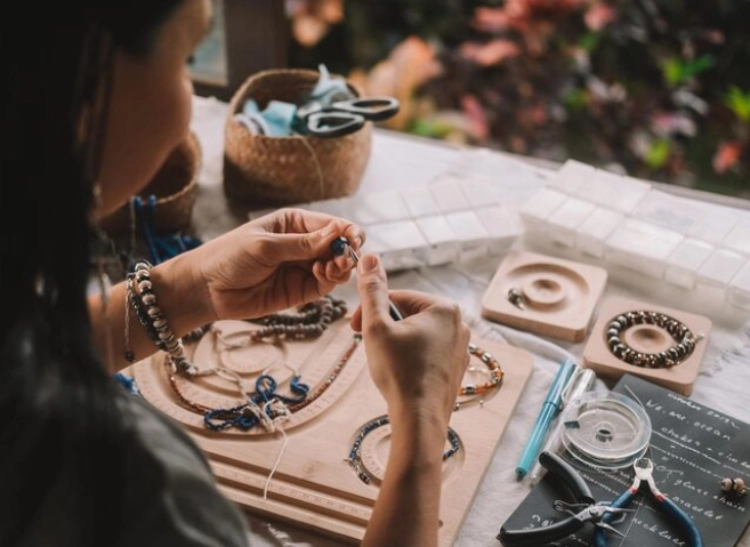
The approved sample is not a decoration. It is the control point for the whole order, including the visual details that define the product and the functional details that protect the customer experience.
Check bead alignment under normal light
Check alignment under boutique light, daylight, and phone-camera light. Review symmetry, motif shape, edge neatness, and how the design reads at normal wearing distance. Japanese Miyuki Seed Bead Heart Earrings are a useful product reference for discussing small-bead pattern consistency and clean edges.
Define acceptable handmade variation
Handmade does not mean every piece can be random. Define which variations are part of the craft and which are defects. A slight woven texture may be acceptable; loose beads, crooked letter forms, sharp edges, missing components, or mismatched metal color should not pass simply because the product is handmade.
Keep a physical approval set
Photos help communication, but a physical approval set helps inspection. Keep the bead colors, metal finish, carding, clasp, chain length, size or weight range, label placement, and packing method together. When a dispute appears, the team can compare against an agreed object instead of arguing over screen color.
Review the sample as a customer would
Put the item on, fasten it, move with it, and look at it from normal distance. A necklace may twist, an earring may pull, or a bracelet may catch on sleeves. Those small moments decide whether the product feels reliable outside the fitting room.
Evaluate Metal and Bead Mixing
Bohemian jewelry often looks strongest when beads and metal create contrast, but that mix also creates quality risks at contact points, connectors, and finish transitions.
Metal finish must support the bead work
If bead work is neat but the metal finish feels rough, the whole piece loses value. The Japanese Miyuki Seed Bead Heart Bracelet can be reviewed for bead pattern, connector handling, closure function, and how metal details sit beside a handmade surface.
Color matching needs a range, not a wish
Beads, thread, and metal may shift slightly by batch. A Bohemian jewelry manufacturer should help define a tolerable range before production. Approve that range in real samples where possible, record the material lot or reference, and require buyer approval before a substitution that changes the design.
Wear points need extra inspection
The highest-risk points are often functional rather than decorative: earring hooks, bracelet closures, necklace jump rings, chain ends, and sharp edges. Pull lightly, check smoothness, fasten and release the closure, and confirm that parts do not scratch skin or catch clothing.
Letter or motif shapes should remain readable
Custom letter and motif designs can lose clarity when bead spacing drifts. Check the design from close view and normal wearing distance. If the shape reads only in a perfect studio photo, the end customer may not understand it when wearing the piece casually.
Judge OEM Experience by Process Behavior
OEM experience appears in how a supplier prevents mistakes before they become expensive. Ask for a usable control process, not a general promise of quality.
Documentation should be simple and usable
The working record should identify the approved material, bead order, metal tone, size or weight range, packaging, labels, and defect examples. It should be clear enough for production and inspection teams to use before something goes wrong.
Inspection should happen before packing
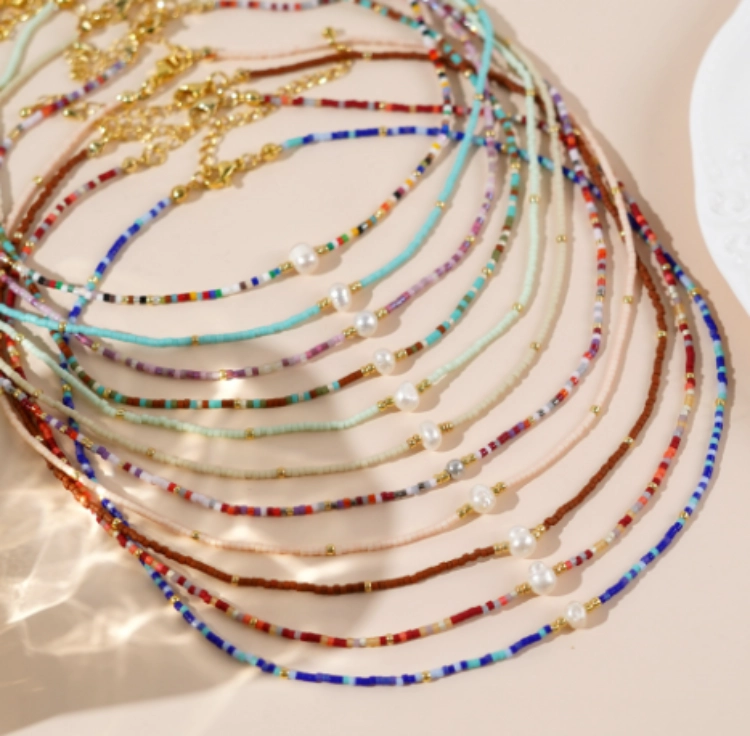
Packing can hide problems. Check bead alignment, pendant direction, chain twist, metal scratches, closure function, and label placement before cards and pouches are closed. LANCUI’s Bohemian Style Rainbow Miyuki Bead Handmade Necklace is a useful reference where color sequence, pendant position, chain length, and wear feel should be checked before final packing. The company’s materials describe raw-material, in-process, final-product, and reporting or feedback checkpoints; the buyer should confirm which records are supplied for the order.
Carry Inspection Records Into the Next Order
A documented quality-control process gives buyers a practical way to ask who checks each stage, how defects are isolated, and how the next batch learns from the previous one. LANCUI’s 4-step quality control protocol of an OEM jewelry manufacturer can support that discussion. The key evidence is the SKU-level record: material reference, approved sample, defect classification, inspection result, and sign-off.
What Buyers Should Ask Before Bulk Production
Good questions save more money than late inspection. Ask for answers that can be tied to the approved sample and the actual production record.
Ask how defects are classified
A supplier should separate minor handmade variation from functional or visual defects. If every issue is called acceptable, the buyer has no control. If every tiny variation is rejected, the product loses its handmade character and production slows.
Ask how packaging protects shape
Bohemian jewelry may combine beads, chains, woven surfaces, and small metal parts. Packaging should prevent tangling, crushing, rubbing, and shape loss. Review the product inside the proposed package before bulk goods are finished.
Ask how repeat orders are stabilized
Ask how approval samples are stored, how material changes are reported, how inspection notes are carried into the next run, and which details are rechecked before shipment. Repeatability is a process behavior, not a slogan.
Ask what happens when material changes
A bead lot, chain finish, or card stock change can affect the final look. A capable Bohemian jewelry manufacturer warns the buyer before substitution and identifies whether a new sample or approval is required.
Ask who signs off before cartons close
Final approval should have a named checkpoint. Someone should confirm bead face, metal finish, closure function, carding, packing direction, and mixed-SKU carton labels before shipment. This prevents attractive pieces from arriving tangled, reversed, or separated from their retail story.
Conclusion
Quality from a Bohemian jewelry manufacturer with OEM experience is visible in the sample but proven in repeatability. Before approving bulk production, buyers should compare a physical sample set, agree the material and color references, define acceptable variation and defect limits, inspect wear points, approve packaging with the product inside, and confirm how the inspection record will be reused for the next order. A supplier is a stronger fit when it can explain those checkpoints clearly and provide evidence for the specific SKU.
Contact
If your team is reviewing bohemian jewelry samples, OEM bead designs, or quality-control standards for a new collection, send the product details through LANCUI’s contact page.
FAQ
What is the first quality sign in bohemian jewelry?
The first sign is usually visual balance: bead alignment, color rhythm, clean edges, and metal details that support rather than distract from the design. It is only an initial screen; function and repeatability still need checking.
How should buyers judge a Bohemian jewelry manufacturer?
Review sample control, defect classification, bead and metal consistency, packaging, inspection timing, material-change communication, and repeat-order records. Ask for evidence tied to the exact SKU rather than relying on a general factory statement.
Does handmade jewelry allow more variation?
It allows some natural texture and small craft variation, but not loose parts, crooked shapes, sharp edges, poor metal finish, or color drift that changes the approved design. The acceptable boundary should be agreed before production.