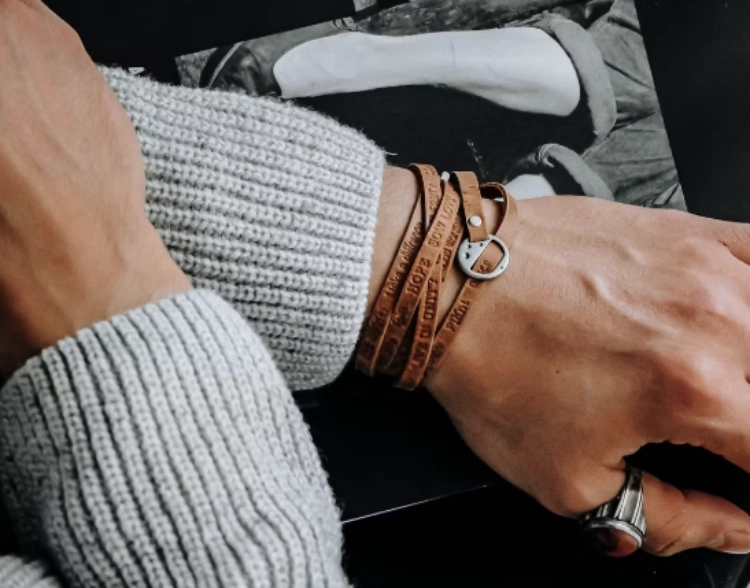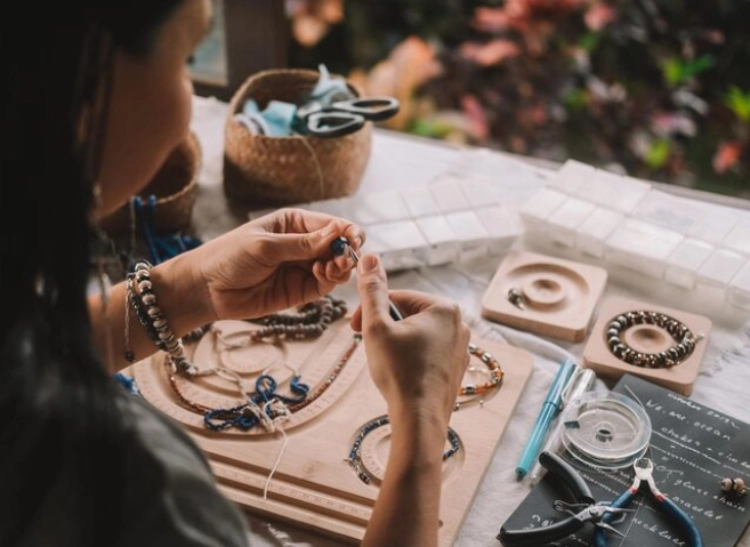
Seed Beads are usually made from glass, although plastic and acrylic versions are also used in jewelry production. The base material changes the weight, color depth, pattern accuracy, surface wear, and price position of a finished piece. Finish names can also be misleading: silver-lined, metallic, matte, and luster normally describe a treatment rather than the material underneath.
LANCUI works with jewelry designers, brands, and retailers on handmade accessories, material sourcing, sampling, OEM, and ODM production. Its process covers raw-material inspection, production monitoring, and final-product inspection. Small differences in hole position, bead shape, or color lot can shift a pattern and increase rework.
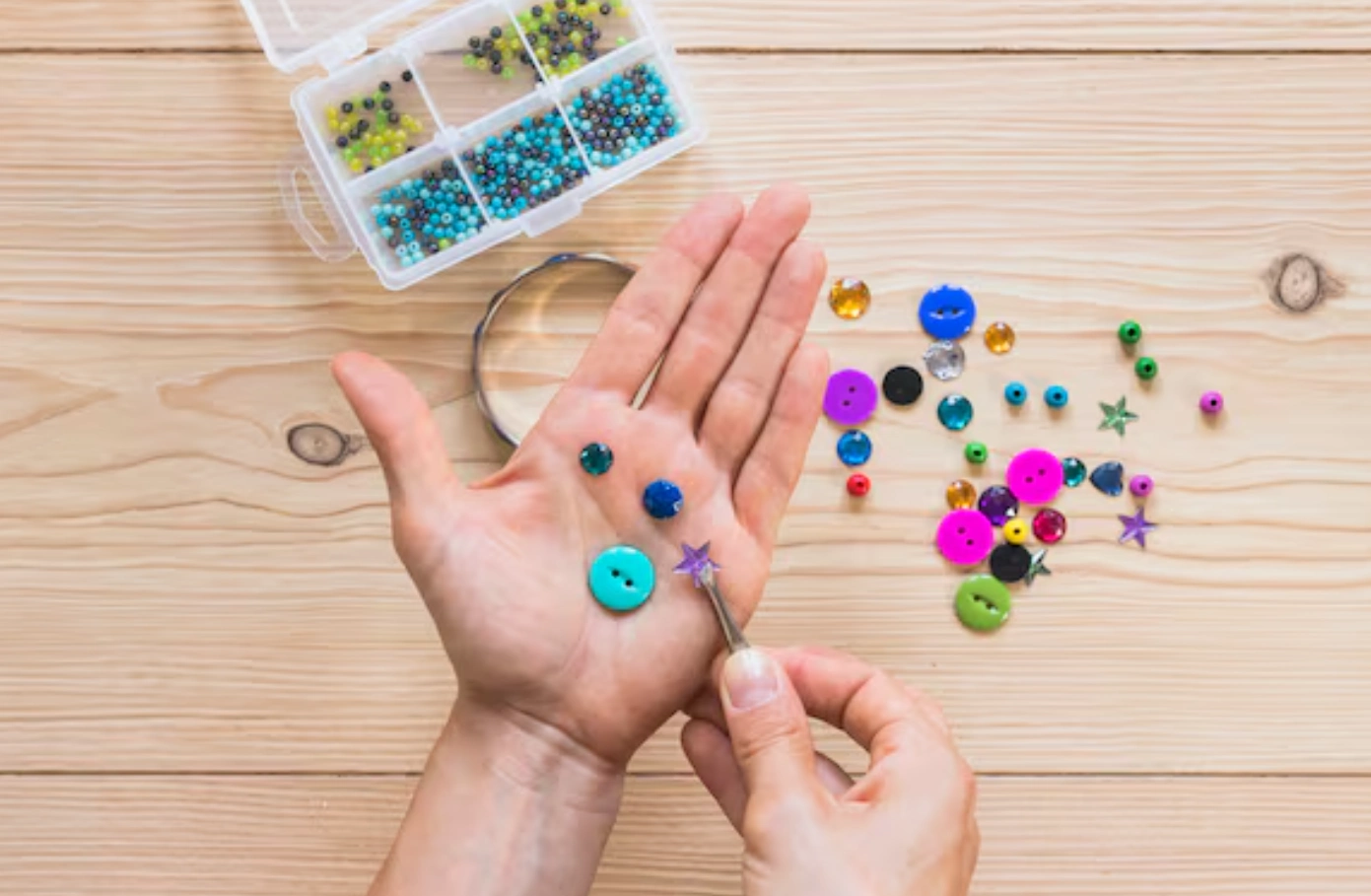
What Are Seed Beads Actually Made of?
The term describes a small bead format used in weaving, embroidery, and fringe. Buyers should confirm the base material, finish, size consistency, and hole quality before comparing options.
Glass as the Primary Base Material
Glass versions suit geometric necklaces, icon earrings, and woven patterns because they support clear light reflection and controlled color placement. For glass seed beads for jewelry making, compare thickness, hole position, edge smoothness, and color variation across a group of samples.
A focused guide to glass and plastic bead materials can support the first material review before a buyer moves into finished-sample testing.
Plastic and Acrylic Alternatives
Plastic and acrylic reduce weight and allow flexible molded shapes. They suit oversized earrings, entry-level collections, or products that would feel heavy in glass. Buyers should still check mold seams, light reflection, and surface wear. Plastic is useful when the brief prioritizes low weight, a larger silhouette, or a controlled entry price.
Base Materials and Decorative Finishes
Silver-lined, metallic, rainbow, matte, luster, and dyed normally describe visual treatment. The bead underneath may still be glass or plastic. A stable base does not guarantee that a coating will resist sweat, friction, packaging contact, or movement against nearby parts.
Buyers asking what are silver-lined beads made of should request two answers: the base material and the finishing method. It also guides thread, findings, and packaging choices.
How Do Glass, Plastic, and Miyuki Seed Beads Perform Differently?
Loose beads can behave differently after weaving, so performance should be judged through thread tension, backing, findings, bead density, and wearing position.
| Selection Factor | Glass | Plastic or Acrylic |
|---|---|---|
| Visual Effect | Deeper reflection and sharper color separation | Lighter, often flatter surface effect |
| Weight | Higher density | Lower density |
| Pattern Use | Suitable for close geometric work | Suitable for larger lightweight forms |
| Main Check | Shape, hole, color lot, coating | Mold marks, surface wear, shape consistency |
Shape Uniformity and Pattern Accuracy
Miyuki Beads are used when a design needs straight rows, even spacing, and controlled color blocks. The Bohemian Style Rainbow Miyuki Bead Handmade Necklace combines Miyuki DB beads with organic glass pendants and an adjustable 41–50 cm chain. Repeated bead dimensions help the rainbow sections remain balanced rather than drifting at the edges.
For buyers asking are Miyuki Beads made of glass, the next check is whether size and finish stay consistent across the approved colors. Different finishes may behave differently during weaving.
Weight, Durability, and Wearing Comfort
Glass is denser than plastic, but comfort also depends on bead count, backing, thread, hooks, and weight distribution.
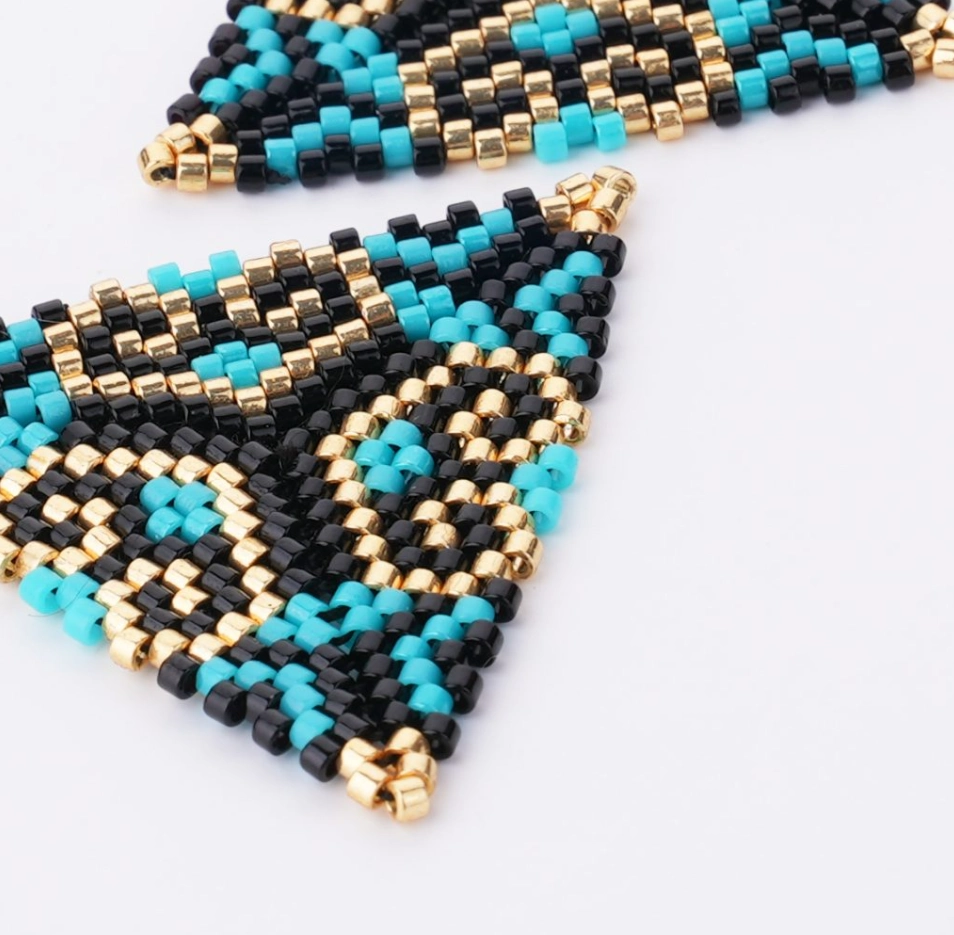
The Aztec Triangle Beaded Statement Earrings use blue, black, and gold glass beads in a hand-arranged triangular pattern. The complete pair should still be assessed for balance, symmetry, edge shape, and movement.
Cost, Finish Stability, and Retail Positioning
Finished cost also reflects sorting loss, hand-placement time, pattern correction, coating consistency, and inspection. Precision glass suits detail-heavy pieces; plastic or mixed constructions can suit larger forms, price-sensitive programs, or market testing.
Approve a sample made with the intended thread, findings, and packaging. Loose beads cannot show coating friction or whether the finished piece hangs evenly.
How Does Seed Bead Material Change the Final Jewelry Design?
Material becomes useful only after it is translated into structure. The same palette changes with bead geometry, finish, spacing, and assembly method.
Precision Colorwork in a Miyuki Necklace
The rainbow necklace uses compact color areas rather than a loose mixture. If one section contains wider beads, the next section shifts and the geometric rhythm weakens. This is why a seed bead material comparison should include a woven sample instead of stopping at visual inspection.
Buyers should approve both the beadwork and the full wearing position before production.
Geometric Bead Placement in Statement Earrings
The triangular earring design depends on symmetry. Blue, black, and gold sections must meet cleanly, while both earrings should carry similar visual weight. During prototyping, inspect the pair together and check whether lower rows pull either side out of shape.
LANCUI’s production structure includes designers, prototype makers, skilled artisans, production supervision, and multiple inspection stages. This supports beadwork in which a small placement error remains visible in the finished product.
Material Matching for Different Use Scenarios
Detailed necklaces and geometric weaving usually benefit from precise glass components. Oversized earrings may need smaller glass beads, plastic parts, or mixed construction. Higher-positioned lines place more weight on color-lot control, pattern accuracy, and surface quality.
The best beads for geometric jewelry are therefore the ones that hold the approved spacing and color layout through sampling and repeated production.
What Should Buyers Check Before Ordering Seed Beads in Bulk?
Bulk purchasing turns small differences into repeated faults. Inspect both loose materials and the finished jewelry system.
Material Samples and Batch Consistency
Check a group rather than one selected bead. Compare thickness, hole position, edge finish, and color under the same light, then confirm that the woven rows stay aligned.
LANCUI checks raw materials, monitors production, and inspects finished products. Client feedback can be incorporated into later production steps, which is useful when a pattern needs correction before mass production.
Coating, Color, and Compliance Checks
A glass base may remain stable while a metallic or dyed surface wears. Review skin contact, friction, humidity, packaging pressure, and functional metal parts.
LANCUI’s knowledge base states that production follows international requirements including REACH, RoHS, and market-specific standards. Documentation should still be agreed before production because the required file set can vary by destination and product structure.
Prototyping and Production Readiness
A useful brief includes the design drawing, target customer, selling market, color direction, price position, and material preference. Approve the prototype before bulk work so bead density, spacing, findings, and packaging can still be adjusted.
LANCUI supports OEM projects based on approved client designs and ODM projects involving trend input, design development, prototyping, sourcing, and production planning. Its services also cover product photography, illustration, sample development, and custom packaging.
How Can Brands Turn the Right Seed Beads into a Market-Ready Collection?
A market-ready collection needs clear positioning, repeatable construction, and inspection points matched to the design risk.
Product Selection Based on Market Positioning
Precision glass or Miyuki Beads suit compact colorwork and close-set patterns. Plastic or mixed structures may be more appropriate for large silhouettes or weight-sensitive ranges. The rainbow necklace represents controlled color placement, while the triangle earrings show how glass can create clear graphic contrast in a statement format.
OEM and ODM Support from LANCUI
In OEM work, the main task is translating an approved design into repeatable production. ODM work may begin earlier with material selection, prototyping, and structural refinement. LANCUI combines handmade production with supplier coordination, inspection, packaging, and product-presentation support, allowing a brand to manage the project through one production route.
Service Support and Contact for Custom Projects
Before discussing a custom line, prepare the product category, reference design, target customer, sales market, material preference, and expected price position. These details make material comparison more useful and reduce changes after sampling.
For sample planning, production questions, compliance documents, or material evaluation, use the project contact channel and share the information already available.
Seed Beads may be glass, plastic, acrylic, or another material, while familiar finish names often describe only the surface. Selection should be based on pattern accuracy, weight, finish wear, price position, and production method. Review the complete sample, confirm batch consistency, and agree on inspection and documentation before bulk production.
FAQ
Q: Are all Seed Beads made of glass?
A: No. Glass is common, but plastic and acrylic are also used. The suitable option depends on the required weight, pattern detail, finish, and price position.
Q: How to tell glass beads from plastic?
A: Compare weight, surface temperature, hole edges, mold seams, light reflection, and sound. Use several checks together because coatings and hollow structures can affect one test.
Q: Are Miyuki Beads suitable for detailed jewelry designs?
A: Yes. Their regular form supports geometric layouts and compact colorwork, but buyers should still approve the exact size, finish, and complete woven sample before production.