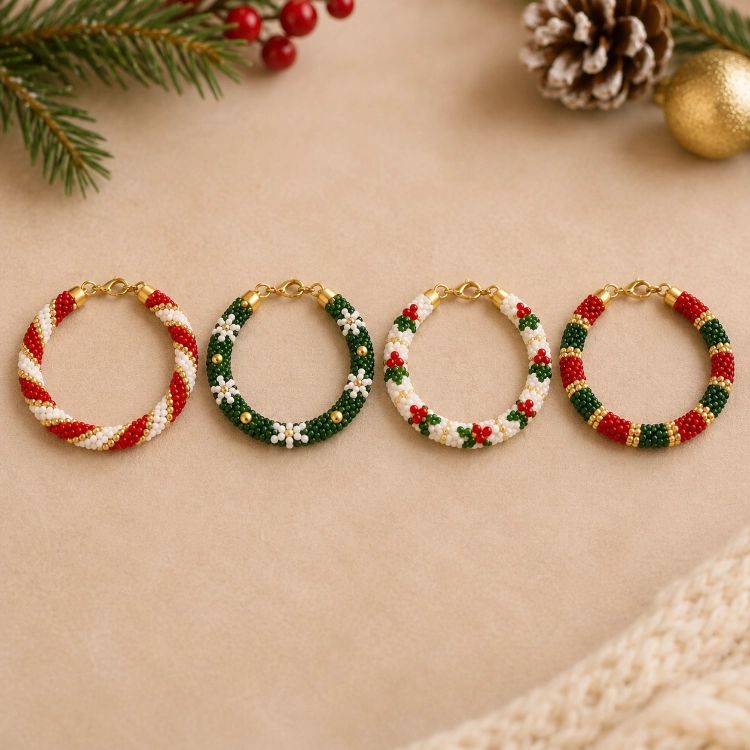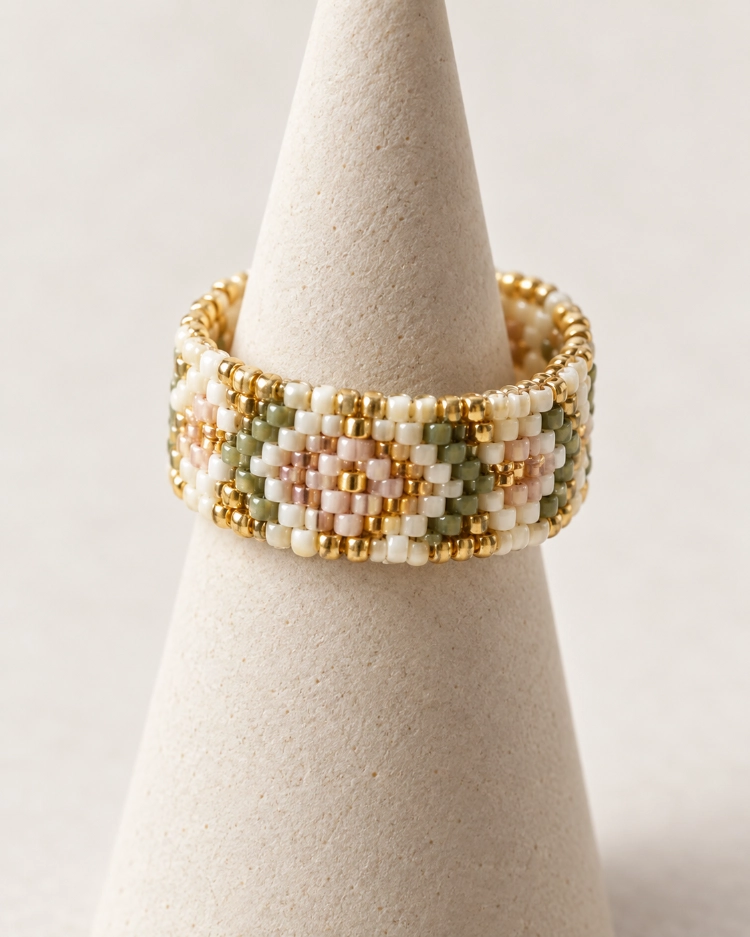
On a small beaded bracelet, a diamond is only a few rows of color. Add one bead at the tip and the shape becomes a tiny shield. An approved sample is the particular physical version a buyer accepted as the order reference. The difference may vanish in a lifestyle image but remain obvious to someone comparing two pieces on a counter. That is the problem in a repeat order: the new sample must be judged against the bracelet that was approved, rather than against a loose description of the motif.

The published design is a starting point
LANCUI’s Handwoven Adjustable Lucky Charm Beaded Bracelet is described with a geometric diamond, glass and crystal beads, handmade construction and an adjustable fit. The online page is enough to identify the style. It cannot tell a maker where every bead belongs. For that, the buyer needs the approved sample or a signed drawing.
Consider a hypothetical approval with a single dark bead at the upper point. The reorder sample has two dark beads there. Both are saleable bracelets, but only one follows that approval. If the buyer accepts the two-bead version, the acceptance should be recorded as a revision. Otherwise the next production run may copy either sample, and the retailer will have no clear basis for a complaint.
Keep the correct sample on the table
The code on the old bracelet deserves a glance before any counting begins. Two color options may have close outlines but different placement of the dark beads. Set a labelled approved sample beside the new one. If the first run contained several accepted versions, keep more than the prettiest example. Those pieces define a range the buyer already accepted. An inspector seeing only one unusually tidy sample could otherwise reject perfectly consistent repeat stock.
Store the original approval photograph with the physical piece. The photograph records the untouched front; the piece shows how the weave behaves when curved. A reference bracelet that has been handled for months can stretch or loosen. The dated image helps resolve that, provided the rows are still legible. A filename with the SKU and revision is easier to trust than another “final diamond” image in a crowded shared folder.
Find where the pattern diverges
Put the old and new fronts at the same scale. Mark the upper point, then count outward along the sloping rows. The first changed row matters more than a general impression that the diamond feels wider. Leave a strip of background beadwork in the crop so the reviewer can see where the motif starts. A photograph trimmed to the colored beads alone makes even a correct pattern hard to place on the bracelet.
The outer row may be the real culprit. When one side gains a bead, the point can remain sharp while the whole motif leans on its display card. The bead route is the path of rows that forms the diamond, independent of which colors fill those rows. Compare the left and right borders through the transition into the plain end section. A marked photograph can show the exact place where the sloping line turns early. “Uneven” gives the maker no such location.
An uneven design may be intentional. If the approved bracelet has a different left and right border, that is what the reorder should follow. A bead count or maximum deviation belongs on the buyer’s signed drawing if the order needs one. The public listing gives no numerical acceptance limit for this style. Inventing a tolerance after the pieces arrive would change the agreement after the work was done.
Let the image show the difference
The sales photograph may flatter the bracelet. The acceptance photograph has to reveal its rows. Shoot the old and new pieces under the same light and at the same scale, with a background that does not swallow the dark border. GIA’s jewelry photography guidance discusses light and backgrounds; NIST explains why a lamp can change perceived color. A macro shot of the new piece cannot fairly be compared with a tiny old catalogue image.
The listing names glass and crystal beads, though an image cannot identify their supplier or the thread beneath them. Those facts belong on the order record. GIA’s photo tips can help make the rows legible, but they cannot turn a close-up into a component list.
See what the diamond does on a wrist
After the flat check, let the band curve around a wrist form. The point may turn to the side or a border may bow. Photograph the position used for the review, without pulling the ends straight. This shows the design a customer will see on a wrist, rather than the shape it holds only on the table.
The page says adjustable but does not specify a mechanism or wrist span. Those questions require the actual sample. Record the form size and position in the review, then give separate decisions for fit and pattern. Approval of one should not silently approve the other.
When the palette changes
A retailer may ask for the same diamond in a darker palette. The old bead route can remain on the drawing, while the new placement of dark and light beads gets a marked photograph. If the maker also changes the route, the retailer is reviewing two changes, not one. Write down which was approved. That small distinction matters months later, when an unexpected row appears in a repeat shipment and no one remembers whether the change began with the palette or the weave.
Leave a record production can use
The approval card should carry a SKU, revision and paired images of the old and new motifs. Mark the center and any row that differs. Add the agreed bead and thread details from the order, along with the accepted handmade variation if one was agreed. A vague “looks good” note leaves the next order open to a fresh interpretation. A marked image shows exactly what passed and what was changed.
LANCUI offers two routes for a bracelet like this. Under OEM, the buyer brings the design and specifications, including a chart if the diamond has a fixed bead count. Under ODM, LANCUI’s designers develop the concept, make prototypes and put a sample in front of the buyer before production. The company says its material suppliers give it a broad sourcing range and its artisans work alongside production equipment. Those capabilities do not settle the shape of this particular diamond; the buyer’s signed reference does.
LANCUI checks raw materials on arrival, monitors production and reviews finished pieces for appearance, dimensions and function. LANCUI says it gives clients reports and feedback. A report on this bracelet could identify the same sample code used on the drawing, then show the first disputed row in a photograph. Without that link, a passing material inspection would say nothing about whether the completed motif matches.
LANCUI lists drawing, illustration, 3D rendering, sample making and product photography among its support services. The drawing is the place for row labels; the sample answers a different question about the curve on a wrist. Its packaging service can be tailored to a client’s brand and to protection during transport or display. For example, a card slot that presses on the point could change the appearance of an otherwise approved diamond. A photograph of the packed sample would show that problem more clearly than another front view of the loose bracelet. Buyers can find company background on LANCUI’s About Us page.
LANCUI’s handmade jewelry work spans more than a decade. Its first overseas collaboration was with Hipenama, founded by Parisian designers Delphine and Jenny. BSCI certification and a broad supplier network are company credentials; the signed drawing and sample are what fix this bracelet’s diamond for a repeat order.
The FTC Jewelry Guides are a further reminder to keep product descriptions supportable. “Handwoven” and “diamond motif” describe the listed bracelet. The approved reference can allow handmade variation while still giving the repeat order a recognizable central design.
Decide what the next order will repeat
After the comparison, mark the first visible difference on the close photograph. Note whether it affects the point, diagonal, border or worn shape. An approval revision is the numbered change that replaces an earlier sample reference. An acceptable difference should remain with that record; a changed motif should go back for correction or a new sample. The FTC’s advertising FAQs give a reason to keep the eventual listing claims supportable. The result is a defined version to order, rather than a memory of the first shipment.
- Approve the repeat sample when its diamond follows the signed reference in both flat and worn views.
- Record a new revision when a visible change is accepted for the next order.
- Request correction when the point or border differs without an agreed change.
For a question about this bracelet, send the SKU, the old and new comparison images, and the proposed change through the LANCUI contact page. That gives the team something precise to check against the drawing and sample before the reorder is placed.